






Leaving already?
Can we tempt you with 5$ off your first order?
Min Order of $50


Care Guide & Supplies
Senior dogs deserve comfort, joint support, and gentle care. The right nutrition and enrichment make all the difference in their golden years.
Habitat, diet, lighting, troubleshooting and a first-48-hours quick start. Free, no email required — from our family in Lancaster County to yours.
The whole guide, free to read right here — habitat, diet, lighting, troubleshooting and a first-48-hours quick start. No email required.
There is a moment most dog people remember. You look down at the muzzle you have kissed ten thousand times and notice it has turned silver. The bounce off the couch has become a careful climb down. The walk that used to be a sprint is now a stroll with a lot of sniffing. Nothing is wrong, exactly. Your dog is simply getting older, and so, in a way, are you. This guide is for the stretch of road ahead, whether you have loved this dog since puppyhood or you just brought home a gray-muzzled rescue who has finally found a soft place to land.
Here is the honest truth, and we will say it plainly because you deserve it: aging is not a disease, but it does bring changes, and many of them are manageable when you catch them early. Stiff joints, dimming eyes, a thinner waistline or a thicker one, a mind that sometimes gets lost in a familiar hallway. None of these mean your dog's best days are over. Senior dogs are often the calmest, most devoted, most grateful companions you will ever share a home with. They also need a bit more attention from you: more watching, more adjusting, and more regular visits with your veterinarian. We will walk through all of it, from the first 48 hours to the hard conversations, in plain language and without graphic detail. Throughout this guide we defer every diagnosis, medication and end-of-life decision to your veterinarian, who knows your dog's body and history. Our job is to help you show up to those conversations prepared, observant and confident. Start with the Quick Start, then come back to the rest at your own pace.
Everything you want in the house in the first week with a senior dog, and what to look for in each category.
Ready to set up? Browse the essentials in our collections: Senior Pet Support & Care, Dog Beds and Mobility & Joint Support Supplements.
Enrichment, one click away. Shop Dog Toys.
A senior dog is not a defective puppy. A senior dog is a finished work: a personality fully formed, habits settled in, preferences well known. They know the word "walk" and the sound of the cheese drawer. They have opinions about the thermostat. If you have been together for years, the dog sleeping on your feet is the one who carried you through every chapter of your life since. If you adopted a senior, you picked a dog who very likely would have waited a long time in a kennel, and who usually arrives with an almost startling gratitude.
There is no single birthday that flips a switch. Larger dogs age faster than smaller ones, and the individual dog matters as much as the breed. The ranges below are approximate and meant as a guide, not a rule. Your veterinarian is the one to tell you when your own dog crosses the line.
| Size category | Typical adult weight | Often considered senior around | Approximate typical lifespan |
|---|---|---|---|
| Small dogs | Under 20 lbs | 7 to 10 years | 12 to 16 years, sometimes longer |
| Medium dogs | 20 to 50 lbs | 7 to 9 years | 10 to 14 years |
| Large dogs | 50 to 90 lbs | 6 to 8 years | 9 to 12 years |
| Giant dogs | Over 90 lbs | 5 to 6 years | 6 to 10 years |
Those numbers are averages. Some dogs sail past them with the energy of a pup, and others slow down sooner because of genetics, past injuries, weight or health conditions. Mixed-breed dogs tend to land somewhere in the range of the breeds they most resemble.
Vets and shelters use a few terms that are worth knowing.
None of these words describes how much your dog can enjoy life. A geriatric dog with good pain control, a soft bed and a patient family can have wonderful days.
What often changes: energy, flexibility, sleep patterns, eyesight, hearing, tolerance for heat and cold, how quickly the dog recovers from a long outing, appetite and metabolism. What does not change: the way your dog looks at you, the way a wagging tail greets the car in the driveway, the deep need for a person to love.
Small changes at home make a big difference. A senior dog does not have to live in a hospital ward. A few well-placed adjustments let aging joints, dim eyes and a wandering mind navigate the day with confidence.
Slick floors are the single most common hazard. Dogs with weak hindquarters slip, splay and fall, and each fall can cause pain or injury and shake their confidence. Cover the routes your dog uses most with rugs that have non-slip backing or with interlocking mats. Keep paw pad hair trimmed so pads can grip. Ask your vet or a rehabilitation professional about traction aids and whether they are right for your dog.
| Surface problem | What it does to a senior dog | What helps |
|---|---|---|
| Hardwood or laminate | Paws slide, hips splay | Runners with rubber backing, trimmed paw hair |
| Tile or vinyl | Very slick when wet | Interlocking foam mats, grip pads |
| Stairs | Hard on joints, fall risk | Baby gate, ramp, carrying small dogs |
| Wet entryways | Slip and fall | Absorbent mats, towel station by the door |
| Polished concrete in garage | Cold and slick | Rubber mat, bed on a platform |
Choose a bed that supports the whole body. Orthopedic beds come in a few categories: high-density foam, memory foam, bolster-edged and flat mattress style, plus heated pet-safe options. Dogs with arthritis often do well with a thick, firm-but-cushioned base. A dog who likes to curl may prefer a bolster; a dog who stretches out may want a flat mat. Put a bed on every floor of the house where your dog spends time, so there is always a soft landing close by. Keep beds clean and dry, and wash covers regularly.
A ramp is usually easier than steps for stiff dogs, because it requires less lifting of the legs. Look for a gentle slope, a grippy surface and a sturdy build. Introduce it with treats and patience, letting your dog sniff and step on it at his own pace. Baby gates keep a wobbly dog from attempting stairs unsupervised, and they also keep a confused dog from wandering into trouble.
For dogs with failing sight, keep furniture in the same place. Rearranging the living room may be fun for you and bewildering for a dog who navigates by memory. Use night lights, leave a lamp on at dusk, and consider a textured mat at the top and bottom of stairs as a tactile cue. Keep the path to water and the door clear.
Place bowls on a non-slip mat so they do not slide. A raised bowl is sometimes suggested for dogs with neck or back trouble, but it is not right for every dog, and some experts have raised concerns for certain breeds. Use one only if your vet agrees. Wash bowls daily.
Aging happens everywhere at once: joints, eyes, ears, brain, organs, teeth and skin. The good news is that you are the person who sees your dog every day, which makes you the best early-warning system your vet has. This section describes what to watch for. It is not a diagnostic tool. Every sign below is a reason to start a conversation with your veterinarian, not to guess at a cause.
Osteoarthritis is a long-term, painful wear of the joints, and it is among the most common conditions in older dogs. It develops slowly, and dogs hide pain well, so many owners first notice it as "slowing down."
Signs to watch for:
Pain relief: what to do and what never to do. Never give your dog human pain relievers. Ibuprofen, acetaminophen and naproxen are toxic to dogs and can cause stomach ulcers, kidney failure and liver damage, even in small doses. Only give medication that your veterinarian has prescribed for your dog, at the dose and schedule your vet specifies. Several prescription options exist, and your vet will choose among them based on your dog's health, other medications and bloodwork.
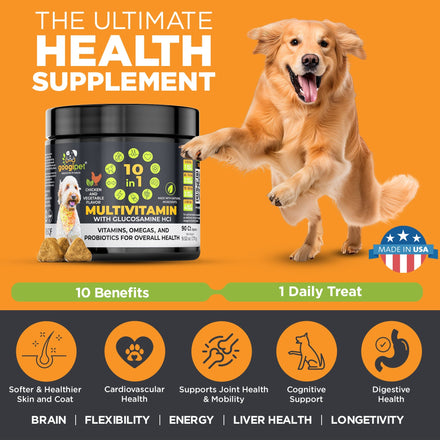
Supplements. Joint-support supplements and omega-3 fatty acids such as fish oil are commonly used for senior dogs. The evidence for some of them is mixed, and quality varies between products. Ask your vet whether they make sense for your dog, which type and what dose. Do not start several at once, or you will not know what is helping.
Weight control is one of the best joint treatments there is. Every extra pound is extra load on every joint, every step. For an overweight dog with arthritis, helping the dog slim down under veterinary guidance is often as helpful as any pill. Other tools your vet may discuss include gentle exercise, physical rehabilitation, acupuncture, laser therapy and, for some dogs, injections or surgery.
Cloudiness in an older dog's eyes is often lenticular sclerosis, a normal aging change in which the lens takes on a bluish haze. It usually does not cause blindness. Cataracts look more like white, opaque patches and can impair vision. Both can look similar to an owner, so have your vet check any change. Other conditions, including glaucoma, are painful and urgent.
Signs of vision loss: bumping into furniture, hesitating on stairs or in dim light, startling when touched, missing a thrown treat, and reluctance to go out at night.
How to adapt: keep furniture where it is, keep floors uncluttered, use night lights, speak before touching, add scent cues with a dab of dog-safe scent near doors, use textured mats at stairs, and use a short leash or harness handle for guidance outside. Blind dogs often cope remarkably well in a stable home.
Hearing loss is common in older dogs and often gradual. Signs: not responding to name, sleeping through the doorbell, being startled when you appear, or barking louder than usual.
How to adapt: teach hand signals now, while your dog can still see them and hear you. Use a flashlight flicker or a gentle floor stomp to get attention, approach from the front, touch softly on the shoulder, and never startle a sleeping dog. Keep your dog on a leash or in a fenced area, as a deaf dog may not hear traffic.
Canine cognitive dysfunction (CCD) is a brain-aging condition in dogs, sometimes compared with dementia in people. It is more common as dogs get older, and many owners miss it, assuming it is simply age. Vets often use the shorthand DISHAA for the main signs:
Many other conditions can cause these signs, including pain, thyroid disease, kidney disease, urinary infection, vision or hearing loss, and brain tumors, so a vet visit is the first step. If CCD is the cause, your vet can discuss options that may include prescription medications, diets designed for brain health, supplements, and environmental strategies.
Enrichment helps. Keep a predictable routine. Offer short, gentle puzzle games and scent work. Take new but easy walks to give the brain something to chew on. Provide a calm, dim night area with a familiar bed and a night light. Keep furniture steady. Praise success and stay calm about accidents. A tired, satisfied mind sleeps better.
Organ disease in older dogs often starts quietly. Bloodwork and urinalysis can catch changes before you see signs, which is why regular senior screening matters.
| Organ | Signs an owner may notice | What to do |
|---|---|---|
| Kidneys | Increased thirst and urination, weight loss, poor appetite, vomiting, bad breath, lethargy | Vet exam, bloodwork and urinalysis; kidney diets only if your vet prescribes them |
| Heart | Coughing (especially at night or after exercise), faster breathing at rest, tiring quickly, fainting, swollen belly | Vet exam promptly; count resting breaths and report |
| Liver | Poor appetite, vomiting, yellow tint to gums or eyes, belly swelling, drinking and urinating more | Vet exam; do not delay |
Do not try to manage any of these with home diets or supplements. Kidney and heart diets in particular should be used only under veterinary direction.
Two common hormone-related conditions in older dogs are an underactive thyroid and diabetes. Signs of an underactive thyroid can include weight gain without eating more, lethargy, a thin or dull coat, cold intolerance and skin problems. Signs of diabetes include increased thirst and urination, increased appetite with weight loss, and cloudy eyes. Another hormonal condition, Cushing's disease, can cause a pot belly, thinning coat, panting and heavy drinking. All of these are diagnosed with veterinary testing and are manageable, so do not let a dog drink and urinate more for weeks without a check.
Older dogs grow lumps. Many are harmless fatty growths, but you cannot tell by touch. Have a veterinarian check every new lump, and any lump that changes size, color, texture or shape. A quick needle sample can often give answers. Make a monthly habit of running your hands over your dog from nose to tail, and note each lump's location and size in your log.
By the time a dog is senior, dental disease is extremely common. It causes pain, infection, bad breath and can affect the heart and kidneys over time. See the Dental, Grooming & Preventive Care section for details.
Leaking urine while sleeping, dribbling when walking, or new accidents have many possible causes, including weak bladder-sphincter control, urinary infection, diabetes, kidney disease, spinal problems and cognitive changes. Unintended weight loss, similarly, is never "just aging." Both deserve a vet visit.
Numbers are quiet, honest friends. They tell you what your eyes might talk themselves out of seeing. A few minutes of tracking each week gives your vet data to work with.
Body condition score (BCS) is a hands-on and eyes-on rating of how much fat your dog carries. Vets commonly use a 9-point scale, where 4 to 5 is ideal, 1 is emaciated and 9 is obese. Ask your vet to show you how to score your own dog.
| Check | Ideal | Too thin | Too heavy |
|---|---|---|---|
| Ribs | Felt easily with light pressure, not seen | Ribs, spine and hip bones visible | Ribs hard to feel under thick fat |
| Waist from above | Visible narrowing behind the ribs | Extreme hourglass | No waist, or a bulge |
| Belly from the side | Gentle upward tuck | Deep, hollow tuck | Sagging or level belly |
| Fat over the back and tail base | Thin layer | Almost none | Thick, rolled |
Muscle condition score is separate from body condition, and it matters a lot for seniors. Your vet feels the muscle over the spine, shoulder blades, skull and hips, and rates it as normal, mild, moderate or severe loss. Dogs can lose muscle (a condition called sarcopenia when age-related) while staying round, which hides the problem. A heavy senior can look "healthy" and still be losing muscle. This is why weight on the scale alone does not tell the whole story.
If your dog is overweight, aim for slow, steady loss under your vet's guidance. Crash diets can cost a senior dog muscle. A vet-guided plan that trims calories while keeping protein adequate helps a heavy dog lose fat while preserving the muscle he needs for standing, climbing and balance.
Your vet may ask you to count your dog's resting respiratory rate at home, because it is an early clue to heart and lung trouble. How to do it:
A sustained resting rate above about 30 breaths per minute is worth reporting to your vet, especially if it keeps climbing over days. Healthy resting rates are usually well below that, and your vet can tell you what is normal for your dog. If your dog is struggling to breathe, call a vet or emergency clinic right away.
Once a week, jot down a few quick notes: how smooth the first steps are after rising, whether your dog hesitates at stairs or the car, how long the walk lasts before slowing, and whether your dog can sit and lie down comfortably. A short video on your phone every month or two lets your vet compare gait over time.
Food is love, and for a senior dog it is also medicine, maintenance and comfort in one bowl. At Walnut Creek Supply we believe in Clean Fuel, No Junk: real, named ingredients and no mystery fillers. For seniors, the bigger point is that the right amount and the right balance matter more than any trend. Your vet is your partner on every nutrition decision, particularly if your dog has a health condition.
It sounds backward, but carefully trimming calories can help an overweight senior hold on to strength. Extra fat adds load on joints and makes everything harder, from rising to climbing. When a vet designs a slow weight-loss plan, using measured meals, a diet with adequate protein, and gentle exercise, a heavy senior can lose fat while keeping lean muscle. Without a plan, dogs on a general "eat less" approach can lose muscle along with fat. So do not simply cut the scoop. Ask your vet for a target weight, a daily calorie goal and a recheck schedule, and weigh regularly.
A change in appetite is information. Common causes in older dogs include dental pain, nausea, kidney disease, medication side effects, pain, stress and loss of smell. If your dog skips more than a meal or two, or eats much less for several days, call your vet. In the meantime you can try these gentle tricks, with your vet's okay:
Look for a complete and balanced food labeled for the right life stage, with named ingredients, an adequate protein level and a calorie amount that fits your dog. Some senior formulas include joint support or brain support ingredients; others are lower calorie. Neither type is automatically right for every dog. Check the statement on the label that says the food meets the nutritional levels for adult maintenance or all life stages, and ask your vet to review the food you pick.
| Food type | Often works well for | Things to know |
|---|---|---|
| Dry kibble | Healthy seniors with good teeth | Can be softened with warm water; check calories carefully |
| Canned or wet food | Seniors with dental pain, low appetite or low water intake | More moisture and aroma; can be rich, so measure |
| Fresh cooked or gently cooked food | Picky seniors, owners who want whole-food meals | Must be complete and balanced; ask your vet or a veterinary nutritionist |
| Freeze-dried or air-dried food | Seniors who like variety; as a topper | Rehydrate for easy chewing; follow label directions |
| Prescription diets | Dogs with kidney, heart, liver, urinary or other medical conditions | Only by veterinary prescription |
Therapeutic diets for kidney disease, heart disease, diabetes, liver disease and other conditions are specifically formulated and only appropriate when a vet diagnoses and prescribes them. Never switch a healthy senior to a kidney or heart diet "just in case," and never put a sick dog on a home-made diet without veterinary supervision. If your dog has a condition, ask your vet to explain exactly what to feed and what to avoid, including treats.
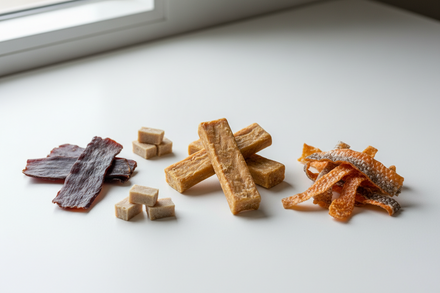
Treats should usually make up no more than about 10 percent of daily calories. Choose soft, small, single-ingredient treats that are easy to chew. Good options to talk over with your vet include small pieces of plain cooked lean meat, green beans, and plain pumpkin. Count every bite toward the daily calorie total, especially if your dog is on a weight plan. Break treats into pea-sized pieces: your dog cares about the gesture, not the size.
Share this list with every family member and visitor.
| Food | Why it is a problem | What to do |
|---|---|---|
| Chocolate and cocoa | Toxic to dogs; darker chocolate is worse | Call your vet or a poison line right away |
| Grapes and raisins | Can cause kidney failure in some dogs, even in small amounts | Treat any ingestion as an emergency |
| Xylitol (a sweetener in some gum, candy, baked goods and peanut butters) | Can cause a dangerous drop in blood sugar and liver injury | Check labels; call immediately if eaten |
| Onions, garlic, chives and leeks | Can damage red blood cells | Avoid, including in broths and baby food |
| Macadamia nuts | Can cause weakness, tremors and vomiting | Avoid |
| Alcohol and raw yeast dough | Poisoning and dangerous bloating | Keep out of reach |
| Caffeine | Racing heart, restlessness, tremors | Keep coffee, tea and energy products out of reach |
| Cooked bones | Can splinter and injure the mouth or gut | Avoid |
| Very fatty scraps | Can trigger pancreatitis | Avoid table scraps and fried food |
| Moldy food and compost | Toxins can cause tremors and seizures | Secure trash and compost |
If you suspect your dog has eaten something toxic, call your veterinarian, the ASPCA Animal Poison Control Center at (888) 426-4435, or the Pet Poison Helpline at (855) 764-7661. Have the product and the estimated amount ready. Do not make your dog vomit unless a vet tells you to.
Shop the food and supplies: Browse Dog Wet Food and Dog Supplements.
A senior dog still needs to move, think and feel good. The goal is not to shut things down; it is to shift to the way of living that suits an older body. A little movement, often, keeps joints lubricated, muscles working and spirits up.
If your dog is recovering from an injury or has significant arthritis, ask your vet about physical rehabilitation. A qualified rehab professional can teach safe exercises that build strength.
| Weather | What to watch | What helps |
|---|---|---|
| Hot (above about 80 F, or humid) | Older dogs overheat quickly, especially short-nosed breeds, heavy coats and dogs with heart or breathing conditions | Walk at dawn or dusk, bring water, avoid hot pavement, stay in shade |
| Cold (below about 40 F) | Arthritis often flares; thin or small dogs chill quickly | Short outings, a dog coat, warm bed, wipe paws after salt or ice melt |
| Wet and icy | Slips and falls | Boots or grips, towel off, stick to cleared paths |
Hot pavement can burn paw pads. If the back of your hand cannot stay on the ground for five seconds, it is too hot for paws.
Most dogs over age three show some dental disease, and by the senior years it can mean pain, loose teeth, infection and trouble eating. Brush daily or several times a week with dog-safe toothpaste, never human toothpaste. Dental diets, water additives and chews may help, but ask your vet which options are appropriate; hard chews can break aging teeth. When your vet recommends a professional cleaning, ask about pre-anesthetic bloodwork and a plan tailored to a senior. Many older dogs do very well with proper monitoring, and untreated dental disease is a real health cost.
Brush gently and often, with soft tools. Check for lumps, scabs, hot spots and sore areas. Keep paw pad hair trimmed. Bathe only as needed with a gentle dog shampoo, dry thoroughly and use a non-slip mat in the tub. Clean ears and eyes as your vet advises.
| Care | What it covers | How often for most seniors |
|---|---|---|
| Wellness exam | Weight, body and muscle condition, heart and lungs, joints, mouth, eyes, ears, lumps | Every 6 months |
| Bloodwork and urinalysis | Kidney, liver, thyroid, blood sugar and more | At least yearly, often every 6 months, as your vet advises |
| Dental care | Home brushing and professional exams or cleanings | Daily to weekly at home; professional as advised |
| Vaccines | Core and lifestyle vaccines | As your vet advises for your dog's health and risk |
| Parasite prevention | Fleas, ticks, heartworm and intestinal parasites | Year-round or as advised for your area |
| Vision and hearing checks | Screening for cataracts, glaucoma and hearing loss | At each exam; sooner if you notice changes |
| Blood pressure and other screening | May be recommended for seniors | As your vet advises |
Each entry below follows the same pattern: what you see, why it happens, what to do, and when to call a vet. None replaces a veterinary exam.
What you see: Sudden stiffness, limping or reluctance to move after a hard day, cold weather or a long outing. Why it happens: Worn joints become inflamed when overused or chilled. What to do: Rest, a warm bed, short walks and a call to your vet about prescribed pain relief. Never give human pain relievers. Call a vet if: Your dog will not bear weight, cries out, or the flare does not ease within a day or two.
What you see: Wet bedding, drips when standing, or accidents. Why it happens: Weak bladder control, urinary infection, diabetes, kidney disease, spinal problems or cognitive change. What to do: More frequent potty breaks, washable bedding, absorbent pads and gentle skin cleaning to prevent scalding. Call a vet if: It is new, your dog strains, you see blood, or your dog drinks much more than usual.
What you see: Staring at walls, standing in corners, getting stuck behind furniture. Why it happens: Cognitive dysfunction, pain, vision loss or illness. What to do: Keep routines and furniture steady, use gentle guidance and short puzzle games. Call a vet if: The signs are new or worsening.
What you see: Pacing, panting, whining or wandering after dark. Why it happens: Pain, cognitive change, needing to go out, failing senses or changes in routine. What to do: An evening walk, a calm bedtime routine, a night light and a bed near you. Call a vet if: Nights are regularly disrupted, since pain and sleep problems are treatable.
What you see: Visible ribs or spine, thinning muscles over the hips, loose-fitting collars. Why it happens: Dental pain, kidney or liver disease, diabetes, thyroid disease, cancer or muscle loss from aging. What to do: Weigh weekly, offer warmed, tempting meals and keep a log. Call a vet if: Loss is unplanned, rapid or ongoing.
What you see: New growths under or on the skin. Why it happens: Many are benign fatty growths; some are not, and you cannot tell by feel. What to do: Note the location and size and take a photo with a coin for scale. Call a vet if: Any new lump, or one that grows, changes color or bleeds. Book the visit rather than watching and waiting.
What you see: Bad breath, drooling, dropping food, chewing on one side, pawing at the mouth. Why it happens: Tartar, gum disease and broken or infected teeth. What to do: Offer softened food and book a dental exam. Call a vet if: Your dog stops eating, or you see facial swelling or bleeding.
What you see: No response to your voice, startling when touched. Why it happens: Age-related hearing loss, ear disease or wax. What to do: Teach hand signals, use a flashlight flicker, approach in view and keep your dog leashed outside. Call a vet if: Hearing drops suddenly or the ears look red, smell or show discharge.
What you see: Bumping into things, hesitating in the dark, missing treats. Why it happens: Cataracts, retinal disease, glaucoma or other conditions. What to do: Keep furniture still, use scent and texture cues, speak before touching. Call a vet if: Eyes look red, cloudy, painful or swollen. Glaucoma is an emergency.
What you see: Straining, small hard stools, or going less often. Why it happens: Low activity, dehydration, low fiber, pain when squatting or medication effects. What to do: Encourage water, short walks and ask your vet about fiber or moisture. Call a vet if: No stool for more than a day or two, repeated straining, or vomiting or a hard belly.
What you see: Slipping on floors, tumbling on stairs, collapsing on the hind end. Why it happens: Weak muscles, joint pain, nerve problems or poor vision. What to do: Add traction, ramps, gates and a support harness. Call a vet if: Falls become frequent, or your dog cannot get up, drags paws or seems painful.
What you see: Heavy panting, drooling, seeking tile floors or lagging on walks in warm weather. Why it happens: Older dogs, heavy coats and heart or breathing conditions cool less efficiently. What to do: Walk at cool hours, offer water and shade, and never leave a dog in a car. Call a vet if: Panting does not settle, gums look bright red, or your dog collapses or vomits. That is an emergency.
| How often | What to do |
|---|---|
| Daily | Feed measured meals; offer fresh water in more than one spot |
| Daily | Short, gentle walks, split into two or three outings |
| Daily | Look at appetite, energy, bathroom habits and how your dog rises |
| Daily | Give any prescribed medications exactly as directed |
| Daily | Brush teeth or offer a vet-approved dental routine |
| Weekly | Weigh your dog, or at least check body condition by hand |
| Weekly | Count resting breaths during sleep and record |
| Weekly | Update the mobility log |
| Weekly | Wash bedding and check for hot spots |
| Monthly | Run your hands over your dog nose to tail, checking for lumps |
| Monthly | Trim or grind nails; trim paw hair |
| Monthly | Film a short walking video for your vet |
| Monthly | Check parasite prevention and medication supplies |
| Every 6 months | Senior wellness exam, with bloodwork and urinalysis as advised |
| Yearly | Review vaccines, dental plan, diet and the home setup |
When you are unsure, call. Dogs hide pain, and a short call to your vet beats a week of wondering. Bring your log, a list of any medications and supplements, and your video clips.
Go today, same day or emergency:
Book within a few days:
This is the part nobody wants to read, and the part you may be glad you did. Caring for a senior dog means gently noticing how the days feel. A good day looks like eating with interest, enjoying a favorite walk or a sunny spot, wanting your company, resting comfortably and showing a bit of the old spark. A bad day looks like hiding, refusing food, struggling to rise, panting from pain, accidents your dog finds distressing, or withdrawing from the family.
Try marking each day on a calendar with a simple good or bad. When bad days begin to outnumber good ones, it is time to talk. Your veterinarian can walk you through a quality-of-life scale, a short checklist scoring things like pain, hunger, hydration, hygiene, happiness, mobility and whether there are more good days than bad. You do not have to figure this out alone, or on a hard day in the middle of the night.
Many vets offer palliative and hospice care, which focuses on comfort rather than cure: pain control, appetite support, soft bedding, home visits and guidance for the family. Ask whether it is available near you.
When the time comes, choosing a peaceful goodbye is an act of love. It is the final kindness you can give a friend who has trusted you for so long. Your vet will explain what to expect and can help you plan, including whether it can happen at home, who will be there and how to say goodbye. Grief afterward is real. Be gentle with yourself and with the children in your home.
It depends on size. Small dogs are often considered senior around 7 to 10 years, medium dogs around 7 to 9, large dogs around 6 to 8 and giant breeds around 5 to 6. These are approximate and vary with breed and the individual, so your vet is the best judge for your dog.
Most vets recommend a wellness exam every 6 months for senior dogs, because changes can happen quickly. Visits usually include a weight and muscle check, a mobility assessment, and bloodwork and urinalysis as advised. Call sooner whenever something seems different.
Feed a complete and balanced food suited to your dog's size, weight and health, with good-quality protein to protect muscle. Do not assume seniors need less protein unless your vet says so. Warmed or softened food can help picky eaters. Kidney, heart and other therapeutic diets are for prescription use only.
Common signs include stiffness after rest, slowing on walks, trouble with stairs, reluctance to jump, difficulty rising and less interest in play. Dogs hide pain, so changes can be subtle. Only a vet can diagnose arthritis and prescribe safe relief. Keeping your dog lean is one of the best things you can do.
Increased thirst can be a sign of kidney disease, diabetes, Cushing's disease, urinary infection or medication effects, and it is not just hot weather. Measure how much your dog drinks over a day and call your vet if the increase lasts more than a few days. Do not restrict water unless told to.
It is a brain-aging condition in dogs, similar in some ways to dementia in people. Signs include disorientation, night waking, house-soiling and changes in how your dog interacts with the family. Other conditions can look the same, so see your vet. Routine, gentle enrichment and veterinary options can help.
It varies with health and breed, but most seniors do best with short, frequent, low-impact walks, such as two or three outings of 10 to 20 minutes, plus gentle play and scent games. Avoid sudden bursts after a quiet week. Watch for lagging and heavy panting, and ask your vet for a plan.
No. Ibuprofen, acetaminophen and naproxen are toxic to dogs and can cause stomach ulcers, kidney failure and liver damage. Only give pain medication prescribed by your veterinarian for your dog. If your dog has swallowed a human pain reliever, call your vet or a poison line right away.
Add traction on slick floors, put in ramps or gates at stairs and furniture, set out night lights, and keep a supportive bed on each level. Place food and water within easy reach, keep furniture where it is, and keep walkways clear. Small changes prevent falls and help your dog feel secure.
Watch for bad days outnumbering good ones, loss of interest in food and favorite things, pain that medication cannot control, and difficulty with basic comfort. Ask your vet to walk you through a quality-of-life scale and to discuss hospice options. Choosing a peaceful goodbye is an act of love.
Ready to shop? Start with Dogs!. 10% of every purchase supports no-kill animal shelters.
Before we earn a dime, 10% of every purchase at Walnut Creek Supply goes to no-kill animal shelters across the country. It is not an option at checkout. It comes off the top of every order, every day, because we believe caring for our own animals and caring for the ones still waiting for a home are the same promise.
That matters for senior dogs in a special way. Older dogs are often the last to be chosen and the first to be overlooked in a kennel, even though they are some of the calmest, most loyal companions you will ever meet. If you have room in your heart and home, ask your local shelter about adopting a senior. If you cannot adopt, your purchases already help the people who care for them.
We are a family business in Christiana, Lancaster County, Pennsylvania. We grow our own food, keep our own animals and stock the clean-label goods we would put in front of our own dogs: no mystery ingredients, no cheap fillers. If you have a question about bedding, ramps, traction or senior-friendly food, call us at (717) 983-8069. We would be glad to talk it through.
Here is to slow walks, sunny windows and one more good day, and then another.
_With love from our family to yours,_ Walnut Creek Supply, Christiana, Lancaster County, Pennsylvania
It depends on size. Small dogs are often considered senior around 7 to 10 years, medium dogs around 7 to 9, large dogs around 6 to 8 and giant breeds around 5 to 6. These are approximate and vary with breed and the individual, so your vet is the best judge for your dog.
Most vets recommend a wellness exam every 6 months for senior dogs, because changes can happen quickly. Visits usually include a weight and muscle check, a mobility assessment, and bloodwork and urinalysis as advised. Call sooner whenever something seems different.
Feed a complete and balanced food suited to your dog's size, weight and health, with good-quality protein to protect muscle. Do not assume seniors need less protein unless your vet says so. Warmed or softened food can help picky eaters. Kidney, heart and other therapeutic diets are for prescription use only.
Common signs include stiffness after rest, slowing on walks, trouble with stairs, reluctance to jump, difficulty rising and less interest in play. Dogs hide pain, so changes can be subtle. Only a vet can diagnose arthritis and prescribe safe relief. Keeping your dog lean is one of the best things you can do.
Increased thirst can be a sign of kidney disease, diabetes, Cushing's disease, urinary infection or medication effects, and it is not just hot weather. Measure how much your dog drinks over a day and call your vet if the increase lasts more than a few days. Do not restrict water unless told to.
It is a brain-aging condition in dogs, similar in some ways to dementia in people. Signs include disorientation, night waking, house-soiling and changes in how your dog interacts with the family. Other conditions can look the same, so see your vet. Routine, gentle enrichment and veterinary options can help.
It varies with health and breed, but most seniors do best with short, frequent, low-impact walks, such as two or three outings of 10 to 20 minutes, plus gentle play and scent games. Avoid sudden bursts after a quiet week. Watch for lagging and heavy panting, and ask your vet for a plan.
No. Ibuprofen, acetaminophen and naproxen are toxic to dogs and can cause stomach ulcers, kidney failure and liver damage. Only give pain medication prescribed by your veterinarian for your dog. If your dog has swallowed a human pain reliever, call your vet or a poison line right away.
Add traction on slick floors, put in ramps or gates at stairs and furniture, set out night lights, and keep a supportive bed on each level. Place food and water within easy reach, keep furniture where it is, and keep walkways clear. Small changes prevent falls and help your dog feel secure.
Watch for bad days outnumbering good ones, loss of interest in food and favorite things, pain that medication cannot control, and difficulty with basic comfort. Ask your vet to walk you through a quality-of-life scale and to discuss hospice options. Choosing a peaceful goodbye is an act of love.
Every senior dog article we've published, in one place.