




Leaving already?
Can we tempt you with 5$ off your first order?
Min Order of $50


Care Guide & Supplies
Hedgehogs need high-protein, low-fat diets — quality kibble plus occasional insects and fresh foods.
Habitat, diet, lighting, troubleshooting and a first-48-hours quick start. Free, no email required — from our family in Lancaster County to yours.
The non-negotiables. Have every one of these set up and running before your new pet comes home.
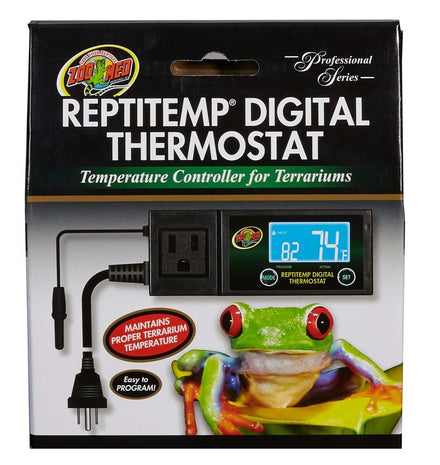
Zoo Med ReptiTemp Digital Thermostat
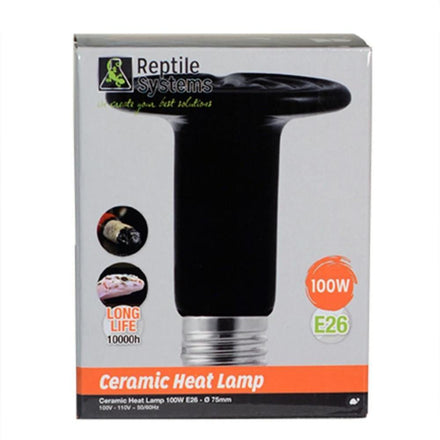
Reptile Systems Ceramic Heat Emitter Black 1ea/100 W
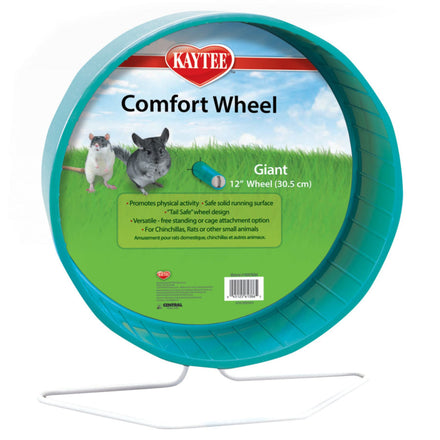
Kaytee Comfort Wheel Giant 12in Diameter

Kaytee Igloo Hideout Assorted 1ea/Giant
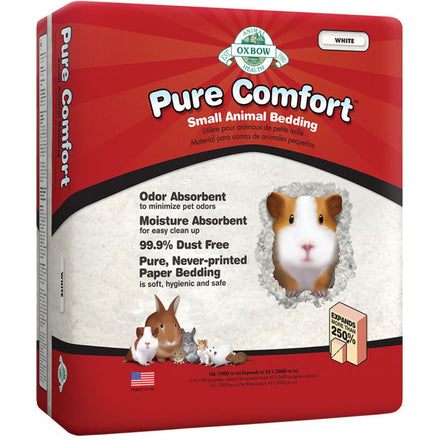
Oxbow Pure Comfort Small Animal Bedding White 72L
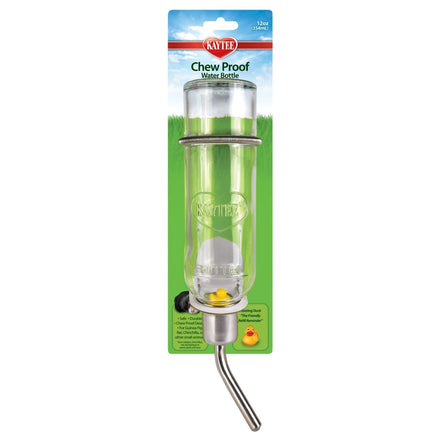
Kaytee Chew-Proof Water Bottle 12oz
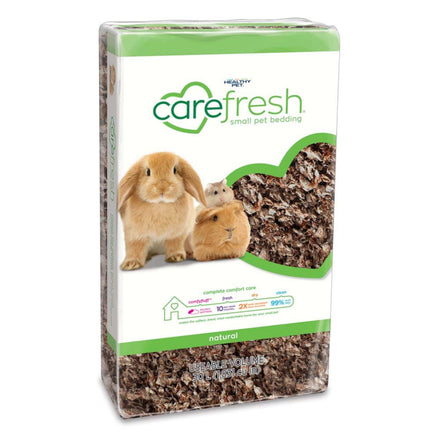
CareFRESH Complete Comfort Small Pet Bedding Natural 1ea/30 l

Fresh News Small Animal Litter Gray 20 L
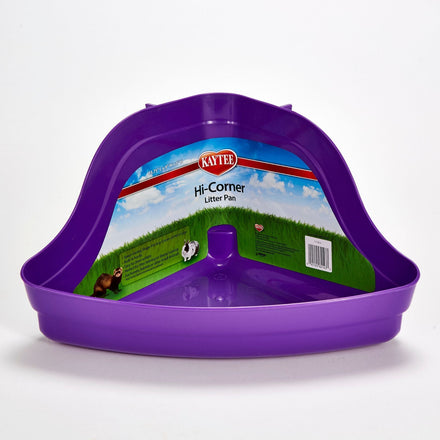
Kaytee Hi-Corner Litter Pan Assorted 1ea
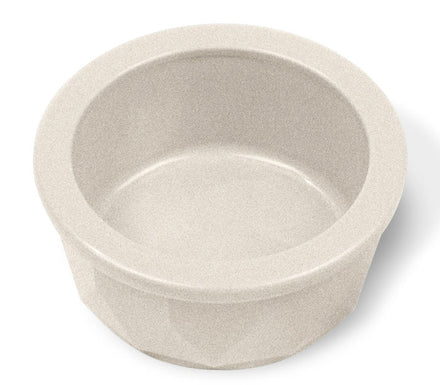
Van Ness Crock Heavyweight Dish Small
Add these over the first month. Enrichment is what turns a correct enclosure into a good life.
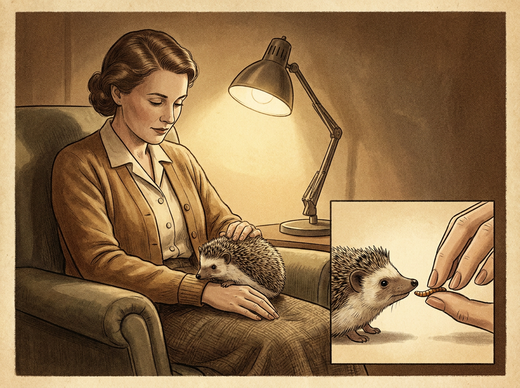
Handling a Hedgehog: Patience, Quills, and Building Trust Over Time
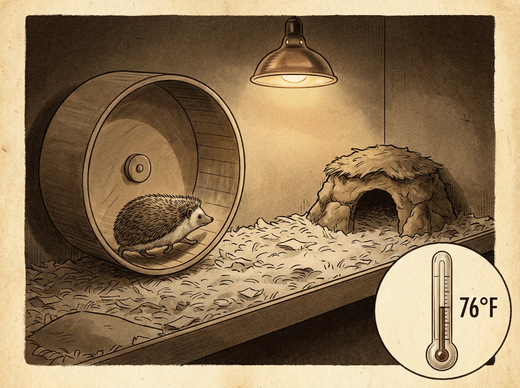
Hedgehog Housing: Cage Size, Wheel Type, and Temperature Requirements
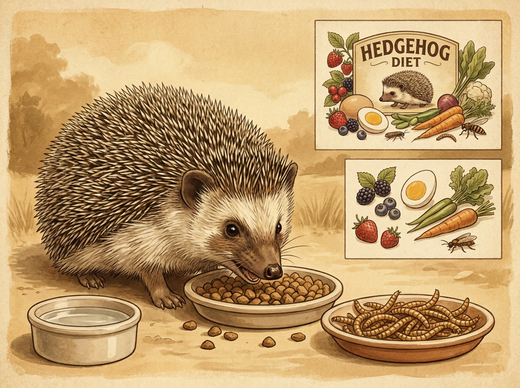
What Do Hedgehogs Eat? A Simple High-Protein Diet Guide
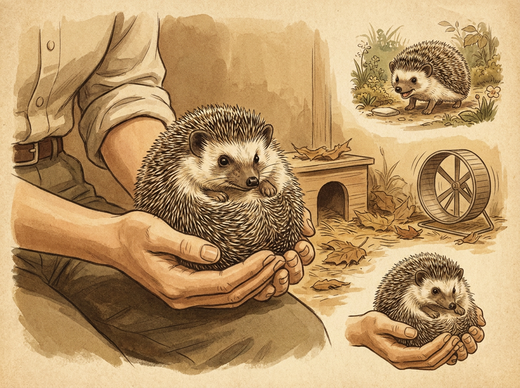
Hedgehog Care 101: The Prickly Pet That Wins You Over Slowly
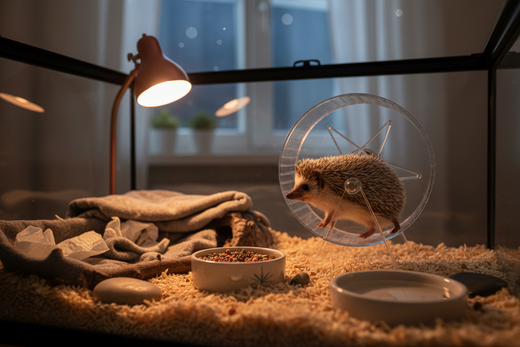
Why Hedgehogs Need a Consistent Nighttime Routine
The whole guide, free to read right here — habitat, diet, lighting, troubleshooting and a first-48-hours quick start. No email required.
Hedgehogs are one of those animals that inspire genuine devotion the moment a new owner gets their first look at a tiny snout investigating a palm — and then inspire genuine confusion the moment that owner discovers how much mainstream hedgehog advice is wrong, outdated, or missing the things that matter most. This is the guide we wish existed on day one: an honest, species-specific walkthrough for the African Pygmy Hedgehog (Atelerix albiventris), the only species commonly kept as a pet in North America. Get the temperature right, feed a clean diet, understand the difference between torpor and sleep, and give this small animal consistent daily contact — and you will have a creature with a personality unlike anything else in the small mammal world. One important note before we go further: hedgehogs are not legal to own as pets everywhere. They are prohibited in Pennsylvania (our home state), are commonly listed as prohibited in California, Georgia and Hawaii, and are banned in a number of individual cities regardless of state law. Check your specific city and county ordinances before purchasing. We will note this again shortly. We will not alarm you about it — but we will not let you find out the hard way, either.
Everything that needs to be in the house on day one, and what to look for in each category.
Ready to set up? Browse the essentials in our collections: Critter Enclosures and Critter Bedding and Accessories.
Enrichment, one click away. Shop Critter Toys and Accessories.
The African Pygmy Hedgehog (Atelerix albiventris) is native to the savanna and dry scrubland of sub-Saharan Africa — central and eastern Africa, from Senegal east through Sudan and south into Zimbabwe. This origin defines the entire care framework: the African Pygmy Hedgehog evolved in a warm, tropical climate with no meaningful winter. It is emphatically not the European hedgehog (Erinaceus europaeus), which is a different species with different biology, different dietary requirements, and a genuine regulated seasonal hibernation cycle adapted to temperate winters. When you encounter hedgehog care advice from British garden wildlife organizations, European hedgehog rescue groups, or sources focused on the hedgehogs that live under garden sheds in England, treat it as irrelevant to your captive African Pygmy. The husbandry does not transfer. The species are as different in their practical requirements as a ball python is from a garter snake.
| Trait | Detail |
|---|---|
| Common name | African Pygmy Hedgehog |
| Scientific name | Atelerix albiventris |
| Native range | Sub-Saharan Africa — savanna and dry scrubland zones |
| Adult body length | 5 to 8 inches (nose to base of tail) |
| Adult weight | 8 to 24 oz (225–680 g); females tend larger than males |
| Typical lifespan | 4 to 6 years with good care; some individuals reach 7 to 8 years |
| Activity pattern | Strictly nocturnal — active from dusk through dawn; sleeps 16–18 hours per day |
| Social structure | Strictly solitary — one animal per enclosure, always |
| Thermoregulation | Cannot self-regulate against cold — no true hibernation capacity |
| Quill count | Approximately 5,000 to 7,000 hollow, modified hair shafts |
In Pennsylvania, the Game Commission treats hedgehogs as exotic wildlife and does not allow them to be kept or sold as pets. Bills to legalize them, most recently House Bill 692 introduced in 2025, have not passed as of this writing. Hedgehogs are also commonly listed as prohibited in California, Georgia and Hawaii, and certain individual cities ban them regardless of state law. Some cities and counties have local ordinances banning hedgehog ownership even where the state does not. Before acquiring a hedgehog, verify your specific state, county, and city rules through your state's Department of Agriculture or Fish and Wildlife office. Check local municipality ordinances separately — a state-level "not prohibited" does not guarantee municipal permission. Regulations change; confirm through official sources rather than relying solely on what you read online or what a breeder tells you. We are not raising this to alarm you, and we know that the overwhelming majority of people reading this guide live in states and cities where hedgehog ownership is unrestricted. But the consequence of not checking is not trivial, and we would rather be honest about it up front.
African Pygmy Hedgehogs are obligate solitary animals. In the wild they come together only to mate, then separate. They form no pair bonds, gain nothing from constant conspecific company, and do not experience loneliness the way social mammals like rats, guinea pigs, or ferrets do. Housed together, two hedgehogs will compete for territory, stress each other chronically, and — between males in particular — fight with injuries serious enough to require veterinary attention. There is no "bonding" between hedgehogs analogous to what happens between compatible rat pairs or bonded guinea pigs. Two females in the same enclosure may appear to coexist while one is actually in a state of chronic subordinate stress, losing weight and developing immune problems slowly and without dramatic visible signal. One hedgehog per enclosure is the standard; it exists for the animals' benefit, and it has no exceptions.
Hedgehogs are strictly nocturnal — active from approximately dusk to dawn and asleep for 16 to 18 hours during the day. Do not wake a hedgehog during daylight hours unless genuinely necessary. Repeated daytime disturbances produce a chronically stressed animal that handles less well and is more prone to illness. Build your interaction schedule around her active hours: early evening is the natural wake transition, and it is the best window for feeding, handling, and supervised free-range time.
This is the most important passage in this guide. An African Pygmy Hedgehog that enters torpor in captivity is experiencing a medical emergency, not a natural seasonal sleep.
In the wild, the European hedgehog hibernates. It has evolved the hormonal signaling, fat storage protocols, and cardiovascular adaptations to survive extended metabolic shutdown through a temperate winter. The African Pygmy Hedgehog has none of these adaptations. It comes from sub-Saharan Africa, where temperature variation is modest and there is no winter cold to trigger or sustain true hibernation. When a captive African Pygmy Hedgehog's enclosure drops below 70°F — or drops sharply and unpredictably — her body responds with the only thermal avoidance mechanism available: it begins to attempt torpor, a metabolic shutdown that her physiology cannot sustain safely. The hedgehog becomes cold, rigid, and unresponsive. She is not sleeping through winter. Her body is failing.
If you find your hedgehog cold, stiff, and unresponsive: place her inside your shirt against your chest or abdomen and warm her slowly with your body heat for 20 to 30 minutes while you call your veterinary clinic. Do not apply a heating pad directly at full heat — rapid external rewarming can cause cardiovascular shock. Gradual body-heat rewarming is the correct first response. Once she is alert and moving, offer water. Then take her to the vet. Torpor causes cellular stress, dehydration, and gastrointestinal disruption that require professional assessment even after a hedgehog appears fully recovered.
Prevention is simple: keep the enclosure above 72°F at all times, measured at hedgehog floor level, with no exceptions. A thermostat on every heat source is not a recommendation — it is a fundamental requirement.
New hedgehog owners frequently alarm themselves the first time they witness self-anointing — a behavior also called anointing behavior and sometimes referred to informally in hedgehog communities as papping (a reference to the frothy, foaming saliva involved). Here is what happens: the hedgehog encounters a new or interesting scent — a different floor surface, a new piece of enrichment, an unfamiliar food, the bottom of a stranger's shoe — and begins licking and chewing at the source with intense, focused attention until she has produced a frothy lather of saliva. She then twists her body into extreme contortions and spreads that froth across her own quills with her tongue. The performance is genuinely dramatic. A hedgehog deep in a self-anointing episode looks briefly like an animal in distress.
She is not in distress. The behavior is completely normal, is documented in wild populations, and occurs across all captive lineages regardless of lineage or rearing. Its biological purpose is not fully understood — leading theories include scent camouflage, a response to bioactive compounds with potential immunological benefit in the saliva, and a general sensory response to novel stimulation. None of the theories are fully confirmed. What is confirmed: it is harmless, it requires no intervention, and it happens most often with new objects, new environments, or novel foods. The correct response when you see it is to watch, not to intervene.
Quilling is the process by which a hedgehog sheds one generation of quills and grows the next. It occurs twice during normal development: first at approximately 6 to 8 weeks of age, when baby quills are replaced, and again around 4 to 6 months of age, when juvenile quills give way to the permanent adult coat. During quilling, the skin is tender, new quill tips are pushing through the skin surface, and the hedgehog is genuinely uncomfortable. A quilling hedgehog will huff and ball up more readily than usual, may be more prone to biting, and will generally tolerate handling less patiently. This is not a personality change — it is a temporary pain response and it passes.
Give extra patience during quilling periods: shorten handling sessions, allow the hedgehog extra time to acclimate before asking her to uncurl, and consider weekly warm oatmeal rinse baths (plain unflavored oatmeal steeped in warm water, used as a rinse rather than a prolonged soak) to soothe irritated skin. Adult quill loss outside these two developmental windows is not quilling — it is a potential sign of mites, fungal infection, or hormonal imbalance and warrants a veterinary call.
The nocturnal schedule surprises owners who expected a daytime companion. A hedgehog who sleeps all day and runs all night is not lethargic or unwell. She is doing exactly what African Pygmy Hedgehogs do. Interaction happens on her timeline, which means early evening and after dark.
The temperature sensitivity surprises owners coming from hamster or guinea pig experience. Those species carry considerably wider thermal tolerance ranges. A hedgehog in a 68°F room is not "a little cool" — she is approaching a torpor attempt. The narrow mandatory window (72–80°F) requires real infrastructure: an actual thermostatted heat source, an actual probe thermometer at floor level, and monitoring. This is non-negotiable.
The bonding timeline surprises owners who expected the immediate tolerance of a socialized hamster or the responsive affection of a rat. Hedgehogs bond on their own schedule and in their own way. The hedgehog who balled up and huffed through every handling session for the first three weeks may, by week eight of consistent handling, sit calmly in your lap investigating everything within snout range and returning to you when she's startled by a noise across the room. That earned trust is its own reward — more meaningful, in most owners' experience, than the immediate friendliness of species who come around faster.
The minimum usable floor area for one African Pygmy Hedgehog is 4 square feet — roughly a 24" × 24" footprint, with 30" × 36" or larger meaningfully better. Floor area outranks height for a ground-dwelling species; a wide, shallow enclosure outperforms a tall, narrow one. C&C cages with a smooth coroplast floor pan, large bin cages with ventilated lids, and purpose-built small mammal enclosures all work — provided the floor is solid. No wire bottoms, no mesh floors, no bar spacing that a toe can thread through.
The wheel is not enrichment. It is infrastructure. A hedgehog without a functional running wheel will develop obesity, fatty liver disease, and behavioral stress. Solid surface, 10 to 12 inches in diameter, no spokes. A spoked wheel is a predictable foot and leg injury mechanism, not a slower-than-ideal option. Clean the wheel daily: hedgehogs defecate while running without pausing, and a fouled wheel becomes a bacterial foot infection source within days. Position it where the hedgehog can approach and exit freely in any direction.
The sleeping house is the psychological center of the hedgehog's enclosure: fully enclosed on all sides except a single entrance, large enough to enter and turn around comfortably, smooth-edged, and positioned at the warmest end of the enclosure closest to the heat source. Hedgehogs sleep up to 18 hours per day and spend nearly all of that inside this structure. An appropriately sized, warm, reliably dark sleeping house produces a settled animal; a cramped, drafty, or insecure one produces a stressed one.
The primary probe thermometer belongs at hedgehog floor level near the sleeping house — where the hedgehog spends most resting hours. The secondary probe belongs at the far end of the enclosure. A room thermometer outside the enclosure provides early warning for overnight temperature drops when the household heating cycles down. Verify all three readings daily during the first two weeks until you understand how your specific setup behaves across a full 24-hour cycle.
Many hedgehogs will choose one corner for elimination and accept a small litter tray placed there. Use unscented paper-based small animal litter — not clay cat litter, not scented litter, not cedar or pine. Most hedgehogs use the tray the majority of the time with occasional floor misses. That is the realistic outcome; cat-level reliability is not a hedgehog standard.
| Substrate | Best for | Notes |
|---|---|---|
| Paper-based bedding (Carefresh, recycled paper pulp) | All setups; recommended default | Soft on feet; dust-free grades widely available; excellent odor containment; no phenol risk; absorbs moisture well without becoming soggy quickly; spot-cleans cleanly |
| Fleece liners | Keepers who prefer weekly machine washing over daily spot-cleaning | Machine-washable; no loose particles to ingest; hedgehogs enjoy rooting under loose fleece strips; inspect for loose threads daily — a thread looped around a toe is a toe amputation risk |
| Aspen shavings (kiln-dried grade) | Budget setups; secondary layer under fleece | Acceptable; significantly lower phenol content than cedar or aromatic pine; purchase kiln-dried grade only to minimize mold and dust; not as soft underfoot as paper-based bedding |
| Hemp bedding | Naturalistic or low-waste setups | Low dust, low odor, biodegradable; acceptable provided no added fragrances or treatments |
| Corn cob bedding | Avoid outright | Molds rapidly when wet; corn cob pieces can lodge in the penile sheath of male hedgehogs, causing serious injury requiring veterinary intervention; no safe use case |
| Cedar shavings | Never | Aromatic phenols in cedar are toxic via respiratory exposure; this applies at any concentration and at any life stage; no safe use case for any small mammal |
| Standard pine shavings (unverified grade) | Never unless explicitly kiln-treated for small animals | Standard pine carries the same phenol concern as cedar; heat-treated kiln-dried grades are a distinct product with meaningfully lower phenol content — confirm the specification; when uncertain, use aspen or paper-based instead |
| Dusty or fragranced bedding of any type | Avoid | Hedgehogs are prone to respiratory infections; dusty or artificially scented beddings create chronic low-level airway irritation that predisposes the respiratory tract to bacterial infection over time |
The practical recommendation for most setups: kiln-dried recycled paper bedding (Carefresh or equivalent) at 2 to 3 inches depth, or fleece liners for keepers who prefer a weekly wash over daily spot-cleaning. Paper-based bedding provides light burrowing possibility, good moisture absorption, and comfortable footing. Fleece offers ease of maintenance and a tactile surface many hedgehogs enjoy. Either is a sound long-term choice.
If there is one section to read before bringing a hedgehog home, it is this one.
The African Pygmy Hedgehog's native climate is warm, consistent, and without the cold of a temperate winter. Her body has no mechanism for thermally adapting downward the way a hamster, rat, or gerbil can. When her environment drops below the safe range, she has only one response available: her body begins to attempt torpor — a metabolic shutdown that the European hedgehog manages safely but that the African Pygmy Hedgehog, lacking the physiological equipment for true hibernation, cannot survive without intervention. Temperature management for an African Pygmy Hedgehog is not about comfort. It is about keeping her alive.
| Parameter | Target value | How to measure it | What goes wrong when it is off |
|---|---|---|---|
| Enclosure floor temperature | 72–80°F | Probe thermometer at hedgehog floor level; verify both ends of the enclosure | Below 70°F: torpor risk begins; below 65°F: torpor is imminent and life-threatening; above 85°F: heatstroke risk |
| Room ambient temperature | Minimum 70°F overnight; 72°F preferred | Room thermometer near the enclosure | A room that dips to 65°F overnight can bring the enclosure below the safe floor even with a heat source running; verify overnight behavior in all seasons |
| Thermostat probe position | At hedgehog floor level inside the enclosure | — | A probe outside the enclosure reads room air, not the hedgehog's actual environment; a 5–8°F discrepancy between room air and enclosure floor is common, especially in mesh-topped setups |
A hedgehog who has entered torpor will be cold to the touch, unresponsive to gentle physical stimulation, and stiff or rigid. Her breathing rate will be dramatically reduced — so reduced it may not be visible at a glance. Her eyes may appear partially open. This is a medical emergency.
Step one: place the hedgehog inside your shirt against your skin on your chest or abdomen. Body heat is the correct first rewarming method — gradual, sustained, and free of cardiovascular shock risk.
Step two: warm her for 20 to 30 minutes while monitoring for response: movement, increased muscle tone, any audible breathing.
Step three: while you warm her, call your veterinary clinic and describe the situation.
Step four: once she is alert, moving, and responsive, offer a small amount of water from a dropper or shallow dish. Do not offer food until she is fully alert and moving normally.
Step five: take her to the vet regardless of how complete her apparent recovery seems. Torpor causes cellular stress, GI disruption, and dehydration that may not be immediately visible but that compound over the following 24 to 48 hours.
After the episode, identify and correct the cause: thermostat failure, heat source burnout, a cold snap that dropped room temperature below what the heat source could offset. Correct the cause before the hedgehog returns to the enclosure. A second torpor episode in rapid succession carries significantly higher risk than the first.
| Setup type | Recommended heat source | Thermostat type | Notes |
|---|---|---|---|
| Any enclosure in a room that drops below 72°F | Ceramic heat emitter (CHE) suspended above the enclosure | Proportional thermostat; probe at hedgehog floor level | Most reliable combination for most setups; CHE produces no visible light and does not disrupt the nocturnal activity cycle; thermostat probe placement at floor level is critical |
| Room consistently held at 72–80°F | Ambient room heating alone | Standard HVAC thermostat; secondary monitoring probe inside enclosure | Sufficient when room temperature is genuinely stable overnight; verify with a 48-hour overnight temperature log before relying on it without supplemental heat |
| Under-enclosure supplemental heat | Low-wattage heating pad under one side of the enclosure floor | On/off thermostat; probe between pad and enclosure floor | Provides a warm floor zone the hedgehog can choose; works well as supplemental heat alongside a CHE for overhead ambient warming; probe between pad and floor prevents surface overheating |
| Cold climate or drafty home in winter | CHE as primary plus a backup heat source on its own thermostat | Both on separate thermostats | A single heat source failure in a cold room is dangerous; a backup with its own thermostat and probe covers equipment failure without an emergency gap |
The thermostat is not optional. An unthermostated CHE operating in a small enclosure can bring the closest point to 95–100°F — well above the 85°F heatstroke threshold. Every heat source, including supplemental pads, must run through a thermostat with the probe at hedgehog floor level.
This debate generates more hedgehog community traffic than almost any other topic, and the answer is not what the bags labeled "hedgehog food" would prefer you to hear. Many commercial hedgehog food mixes are nutritionally inferior to a well-chosen premium dry cat food. Hedgehog foods sold in mainstream pet retail frequently include dried fruit, seeds, and corn-based fillers that push fat content too high and depress protein quality. Many rely on sunflower seeds and dried mealworms as prominent ingredients — precisely the two high-fat items that veterinary hedgehog nutrition guidance consistently flags as contributors to obesity and fatty liver disease. The marketing presentation implies species-appropriate nutrition; the ingredient panel often tells a different story.
A well-chosen high-quality dry cat food can and regularly does outperform commercial hedgehog food on every relevant nutritional marker. The label targets to read for:
If you choose a dedicated hedgehog food, apply the same label discipline. Several specialty hedgehog formulas do meet acceptable nutritional standards — but verify the panel rather than trusting the package.
Live insects are an appropriate and genuinely enjoyed dietary supplement for African Pygmy Hedgehogs — in the correct species, at the correct quantities. Not all insects are nutritionally equal, and the quantity matters as much as the species choice.
| Insect | Fat content | Recommendation | Notes |
|---|---|---|---|
| Black soldier fly larvae (BSFL) | Low-moderate; high calcium | Best regular insect supplement — 3 to 5 larvae, 2 to 3 times per week | High calcium-to-phosphorus ratio; nutritionally superior to mealworms for regular feeding; widely available live or dried; most hedgehogs accept them readily |
| Dubia roaches | Low-moderate | Good regular supplement — 2 to 3 adults or 4 to 5 nymphs, 2 to 3 times per week | Excellent protein-to-fat ratio; less likely than mealworms to contribute to obesity; readily accepted by most hedgehogs |
| Crickets | Low | Acceptable supplement — 3 to 5, 2 to 3 times per week | Nutritionally solid; ensure gut-loaded before offering; some hedgehogs find the movement engaging |
| Mealworms (live or dried) | High | Occasional treat only — 2 to 3 maximum, once per week at most | Hedgehogs eat mealworms in unlimited quantity if offered; their high fat content makes them a fatty liver disease risk as a regular item; dried mealworms as a staple ingredient in commercial hedgehog food is one of the main reasons those products underperform |
| Waxworms | Very high | Special treat only — 1 to 2, very rarely | Addictive; very high fat; useful for medication delivery or building initial food trust during bonding, not as a routine item |
| Wild-caught insects | Never | — | Unknown pesticide exposure; unknown parasite load; no wild-caught insect is appropriate for a captive hedgehog regardless of species or source |
| Food | Safe? | Notes |
|---|---|---|
| Cooked chicken or turkey (plain, unseasoned) | Yes | Excellent high-protein treat; a small piece 2 to 3 times per week is appropriate |
| Cooked scrambled egg (no butter, no salt) | Yes | Enjoyed by most hedgehogs; useful bonding treat |
| Blueberries, raspberries | Yes — small amounts | Cut to small pieces; limit to 2 to 3 per week; high sugar content means moderation |
| Apple (seedless, peeled) | Yes — small amounts | Remove seeds; cut very small; occasional only |
| Cooked sweet potato or carrot (softened) | Yes — small amounts | Small pieces as enrichment; not a staple |
| Mealworms | Yes — occasional only | High fat; see insect table above; 2 to 3 maximum, once per week |
| Grapes and raisins | Never | Toxicity risk; associated with kidney damage |
| Onion, garlic, chives, leeks | Never | Toxic to hedgehogs; cause red blood cell damage |
| Avocado | Never | Contains persin; toxic |
| Mushrooms | Never | Toxicity risk from multiple varieties; not worth the uncertainty |
| Nuts and seeds | Never as staples; avoid generally | High fat; sunflower seeds are a specific fatty liver disease risk; no safe use as a regular item |
| Dairy and milk products | Never | Hedgehogs are lactose intolerant; causes GI distress and diarrhea |
| Raw meat | Never | Salmonella contamination risk |
| Dried fruit (commercial) | Avoid | High sugar; frequently contains preservatives; not appropriate |
| Wild-caught insects | Never | Pesticide and parasite risk; see insect guide above |
Obesity is the single most prevalent health issue in captive African Pygmy Hedgehogs, and it develops slowly enough that owners miss the progression until it is already significant. A healthy hedgehog should be able to curl into a complete, tight ball — flanks folded in, face fully hidden, the whole body forming a smooth sphere. A hedgehog who cannot fully curl — whose flanks bulge out when she attempts to ball up, or whose face remains exposed, or who simply cannot close the shape — is carrying excess weight. At that stage, fatty liver disease is a likely concurrent finding.
Practical obesity prevention comes down to four consistent habits: measure the nightly food portion (1 to 2 tablespoons of dry kibble per night for a typical adult is a starting benchmark, adjusted for the individual's activity level and build); verify the wheel is being used nightly by checking for wheel debris and fecal matter on the track each morning; limit mealworms and waxworms to the quantities described above; and weigh the hedgehog monthly to catch a gradual upward trend before it becomes a health crisis.
Shop the food and supplies: Browse Critter Food Treats & Feed.
Hedgehogs are not immediately affectionate animals. This is not a character flaw — it is an accurate expression of what they are: prey animals with well-developed threat detection, significant individual temperament variation, and no evolutionary history of bonding with large mammals. The bonding process takes weeks to months and proceeds entirely at the hedgehog's pace. Owners who approach this with patience consistently report a depth of eventual trust that is surprising. Owners who approach it expecting a hamster's immediate tolerance tend to give up somewhere in week two, which is almost always too early.
Handle your hedgehog for 15 to 30 minutes daily, beginning on day three or four. Early evening is the right window — she is transitioning from sleep to activity. Scoop from below; a hand descending from above mimics a predator. She will ball up. Rest her in cupped palms and wait. The huffing slows, the ball softens, the snout appears. In the early weeks this may take five minutes; by month two, most hedgehogs investigate within the first minute; by month three, many sit comfortably without balling at all.
A bonding pouch — a small fleece bag worn inside your clothing against your body — is one of the most consistently effective bonding tools for hedgehogs. Place her in the pouch while you are seated in the evening. The sustained scent and warmth exposure at low pressure, with no direct handling demand, accelerates trust-building considerably. Many owners report the first truly relaxed interaction happening after bonding pouch sessions rather than during open-floor handling.
The nightly wheel is the baseline — not enrichment, infrastructure. Free-range floor time in a supervised space larger than the enclosure allows the hedgehog to cover real ground. Foraging enrichment — kibble and insects hidden inside cardboard tubes, under paper cups, in crinkled paper — engages the natural rooting behavior hedgehogs express constantly in the wild. Novel tunnels and objects rotated into the enclosure periodically trigger investigation and self-anointing, both signs of an actively exploring animal. Scent socialization — placing worn clothing in the enclosure for a day before returning it to your laundry — provides low-effort scent reinforcement that many owners find helpful during early bonding.
Weekly shallow soaks in warm water (approximately 100°F — warm, not hot) clean the feet and provide quiet bonding time. About an inch of water in a basin, five to ten minutes, a soft toothbrush between the toes. Rinse, then wrap in a warm towel and hold her against your body until fully dry — hedgehogs are susceptible to drafts immediately after bathing. No shampoos, soaps, or essential oils unless directed by a vet.
What you see: the hedgehog is cold, rigid, or stiff to the touch and does not respond to gentle physical contact; her breathing rate is dramatically reduced or not visibly apparent; she cannot be roused with normal handling stimulation.
Why: enclosure or room temperature has dropped below 70°F — from a thermostat failure, a heat source burnout, an overnight cold snap that overwhelmed the heat source's capacity, or simple failure to verify the enclosure floor temperature with a probe thermometer. The hedgehog's body has triggered a torpor response that her tropical physiology cannot sustain.
What to do: place her inside your shirt against your skin and warm her slowly with your body heat for 20 to 30 minutes while you call the vet. Once alert and moving, offer water. Take her to the vet regardless of apparent recovery.
When to call a vet: immediately. Torpor in an African Pygmy Hedgehog is a same-day emergency. Do not wait to see whether she "comes around on her own" over several hours.
What you see: the hedgehog cannot fully curl into a tight ball; flanks bulge and face remains partially exposed; movement is sluggish; the normally active evening period is increasingly sedentary.
Why: excessive caloric intake relative to activity — too-generous kibble portions, regular high-fat insects (mealworms, waxworms), and insufficient wheel use. Hepatic lipidosis (fatty liver disease) is the internal consequence and is one of the most common causes of premature death in captive hedgehogs.
What to do: reduce daily kibble portion; eliminate or drastically reduce mealworms and waxworms; confirm the wheel is functional and being used nightly; schedule a vet appointment for a baseline assessment.
When to call a vet: if the hedgehog cannot fully curl, book within the week. Do not attempt sudden dramatic caloric restriction without veterinary guidance.
What you see: dry, flaky skin; excessive scratching around the face, ear margins, and quill line; quill loss outside the developmental windows; face-rubbing against enclosure surfaces; in heavier infestations, skin thickening and crusting at the ear margins.
Why: hedgehog mites (Caparinia tripilis and related species) are extremely common in captive African Pygmy Hedgehogs — more common than most new owners expect. They can be introduced through new bedding, secondhand equipment, or contact with an infested animal. Unlike snake mites, hedgehog mites are often not visible to the naked eye; a veterinary skin scrape is typically needed for confirmation.
What to do: schedule a vet appointment. Mite treatment requires a vet-prescribed topical antiparasitic — do not use over-the-counter dog or cat mite products, many of which are toxic to hedgehogs. Replace all bedding and fully clean the enclosure during treatment.
When to call a vet: within a few days. Mites progress to significant secondary skin damage if untreated.
What you see: progressive hindquarter weakness — stumbling, wobbling, dragging rear legs, or an asymmetric gait that develops over time; weakness spreading forward over weeks to months; late stages include inability to curl, visible muscle wasting, and complete hindlimb paralysis.
Why: Wobbly Hedgehog Syndrome (WHS) is a progressive neurological disease specific to African Pygmy Hedgehogs, resembling multiple sclerosis in its pattern of demyelination. It has a significant genetic component and is more prevalent in certain bloodlines. There is no cure. The disease is progressive and ultimately fatal.
What to do: seek veterinary diagnosis to confirm WHS and rule out treatable causes (injury, spinal infection, metabolic disease). Supportive care — ramp access to food and the wheel, shallow dishes, soft bedding — maintains quality of life for a variable period.
When to call a vet: as soon as you notice hindlimb wobbling or asymmetric movement. Some conditions that look like early WHS are treatable; early diagnosis allows appropriate care planning.
What you see: reluctance to eat hard kibble; pawing at the mouth; visible tartar or discoloration on the teeth; swelling at the jaw margin; weight loss; bad breath during handling.
Why: periodontal disease, tooth root abscesses, and tooth loss are common in hedgehogs. The condition progresses slowly and is often not obvious until well established; oral examination typically requires veterinary sedation.
What to do: offer occasional softer food options (cooked chicken, cooked egg) if kibble aversion is developing; schedule a veterinary dental assessment.
When to call a vet: within the week. Dental abscesses spread to underlying bone quickly and require antibiotic treatment and often extraction.
What you see: audible wheezing or crackling during normal breathing; nasal discharge (clear or cloudy); labored breathing; lethargy during the normally active evening period; open-mouth breathing in severe cases.
Why: bacterial respiratory infection, typically triggered by drafts, dusty or fragrant bedding, temperatures below the safe range, or chronic stress-related immune suppression.
What to do: correct any temperature deficiency immediately; remove dusty or fragrant bedding; ensure the enclosure is draft-free.
When to call a vet: within one to two days. Respiratory infections in hedgehogs progress quickly and respond well to antibiotics when caught early. A hedgehog wheezing on Monday should have a vet appointment confirmed by Tuesday.
What you see: the hedgehog is stretched flat rather than in her normal resting curl; warm or hot to the touch; lethargic or unresponsive; not active during her normal evening period; convulsions or collapse in severe cases.
Why: enclosure temperature above 85°F — from direct sunlight on the enclosure, a thermostat running too high, an unthermostated heat source, or a heating vent too close in summer.
What to do: move to a cooler area immediately; dampen the underside with slightly cool (not cold) water; offer water; call the vet.
When to call a vet: same day. Heatstroke is a medical emergency. Any hedgehog who collapses or becomes unresponsive from heat requires veterinary assessment regardless of apparent recovery.
What you see: a hedgehog previously tolerant of handling now hufts readily, balls up immediately, or bites; scattered quills in the enclosure; shorter quill lengths or new tips emerging from the skin surface; skin slightly irritated at the quill base.
Why: normal developmental quilling at 6 to 8 weeks and again at 4 to 6 months — uncomfortable and temporary.
What to do: shorten handling sessions; allow extra uncurling time; offer warm oatmeal rinse baths (unflavored oatmeal steeped in warm water) to soothe skin; a small amount of unscented coconut oil worked in with a soft toothbrush helps in notably irritated cases.
When to call a vet: if quill loss is occurring outside the developmental windows, or if skin is crusting, thickening, or clearly damaged — that is mites or fungal infection, not quilling.
What you see: swollen or enlarged abdomen in a female; blood in the urine, bedding, or around the genital area without an obvious wound; vaginal discharge; gradual weight loss; declining wheel and food interest over weeks.
Why: uterine and ovarian tumors are among the most common malignancies in female African Pygmy Hedgehogs, particularly over three years of age. They frequently develop silently until already advanced.
What to do: have females over two years examined annually with abdominal palpation and ultrasound if available. Report any of the above symptoms immediately.
When to call a vet: same day if blood is observed or the hedgehog is visibly unwell; within the week for abdominal swelling found incidentally during handling.
| What you see | Likely cause | What to do | Vet urgency |
|---|---|---|---|
| Cold, rigid, unresponsive | Torpor — temperature emergency | Warm against body heat; call vet immediately | Same day — emergency |
| Cannot fully curl; sluggish; gaining weight | Obesity / fatty liver disease | Reduce food, cut fat treats, verify wheel use | Book within the week |
| Flaky skin; excess scratching; quill loss outside developmental windows | Mites | Vet diagnosis required; full enclosure clean | Within a few days |
| Progressive hindleg wobbling or weakness | Wobbly Hedgehog Syndrome (WHS) | Vet confirmation; supportive care planning | As soon as noticed |
| Reluctance to eat hard kibble; pawing at mouth; jaw swelling | Dental disease | Veterinary dental assessment | Within the week |
| Wheezing, nasal discharge, labored breathing | Respiratory infection | Correct temperature; eliminate drafts; call vet | Within 1–2 days |
| Stretched flat, hot to touch, lethargic or collapsed | Heatstroke | Move to cool area; dampen underside; call vet | Same day — emergency |
| Grumpy, balling readily, quill loss at 6–8 weeks or 4–6 months of age | Normal developmental quilling | Shorter sessions; oatmeal rinse bath; patience | Only if skin is crusted or damaged |
| Blood in urine or bedding; abdominal swelling; vaginal discharge in female | Reproductive tumor | Call vet | Same day for blood; within week for swelling |
A hedgehog who curls into a tight ball and huffs is not expressing aggression. She is expressing alarm. Presenting the full quill surface to a perceived threat is the only physical defense available to a small prey animal who cannot outrun a predator. It is not a personality verdict, it is not evidence the hedgehog "doesn't like you," and it is not a reason to stop regular handling. It is accurate information about where you are in the trust-building timeline.
Rest the balled hedgehog in cupped palms and wait. Do not attempt to pry her open, force fingers under the quill edge, or prod the quill surface — these approaches increase defensive activation. Simply hold her: steady, warm, non-threatening. The huffing slows. The ball softens. The snout appears, followed by the front feet. Let her set the pace. In the early weeks this may take several minutes; with consistent handling over months, many hedgehogs do not ball at all.
Gloves are reasonable for the first one to three sessions when bite behavior is unpredictable. After that, bare hands are strongly preferred — the scent and warmth of skin are part of the trust signal you are building, and gloves interrupt both. A hedgehog who bites is communicating that session intensity exceeds her current threshold. Shorten the session and work back up gradually.
The realistic bonding timeline is two to eight weeks of consistent daily handling before the hedgehog responds with genuine comfort rather than reluctant defensive tolerance. Consistency matters more than session duration: a 15-minute daily session outperforms a once-a-week 45-minute session. Same approximate time each evening, same calm approach, same location — predictability reduces the novelty-threat response faster than variable, intensive contact. Note: a hedgehog under chronic thermal stress (enclosure running too cool) bonds more slowly. Correct temperature is part of the bonding equation.
Hedgehogs can be a wonderful experience for older, patient children under close adult supervision — not an appropriate independent pet for young children. A hedgehog who hufts and balls on cue will frustrate a child expecting an immediately cuddly animal, and frustration produces forced handling that reverses bonding progress. Children should always handle seated on the floor, support the hedgehog's full weight, and hand her back to an adult immediately when she hufts. Thorough handwashing after handling is important: hedgehogs carry a low but real Salmonella transmission risk.
| How often | What to do |
|---|---|
| Daily | Check enclosure floor temperature at the probe thermometer; verify it is within 72–80°F at both the sleeping end and the far end |
| Daily | Clean the exercise wheel — remove fecal matter and debris; a fouled wheel left overnight becomes a bacterial foot infection source |
| Daily | Check and refill water supply; replace water in an open dish fully; rinse the sipper bottle nozzle |
| Daily | Check food dish; refill with the appropriate nightly portion; remove any uneaten moist treat items from the previous night |
| Daily | Spot-clean visible feces and soiled bedding from the floor and litter tray |
| Daily | At dusk, observe the hedgehog waking and beginning her evening activity — moving normally? Alert? No labored breathing? |
| Every 3–5 days | Offer an insect supplement session (BSFL, dubia, or crickets at the portions from the insect guide) |
| Weekly | Full wheel wash with warm water and mild unscented soap; dry completely before returning |
| Weekly | Warm foot-cleaning bath in shallow warm water; soft toothbrush between toes; dry fully with a warm towel afterward |
| Weekly | Weigh the hedgehog on a kitchen scale and log the result; compare to prior weeks for any upward trend |
| Weekly | Full body inspection during or after a handling session — skin condition, quill condition, any scratching pattern, any swelling |
| Weekly | Full bedding change for paper-based setups; launder and dry fleece liners; clean sleeping house interior |
| Monthly | Deep enclosure clean — remove all decor, scrub all interior surfaces with a hedgehog-safe disinfectant, air fully dry before replacing bedding |
| Monthly | Review the weight log for trends; adjust daily food portion if consistent weight gain is evident |
| Monthly | Photograph the hedgehog from directly above — a dorsal view provides a useful body-condition baseline for comparison over time |
| Monthly | Check all enrichment items for wear: inspect fleece for loose threads; check tunnels for rough edges; replace damaged items |
| Annually | Exotic veterinary wellness exam; blood panel, abdominal palpation, and fecal exam; twice annually for animals over 4 years |
| Annually | For females over 2 years: request abdominal ultrasound evaluation if available; uterine tumors are common and frequently asymptomatic until advanced |
Hedgehogs are prey animals, and prey animals conceal illness as a survival strategy. By the time a hedgehog looks visibly unwell to a casual observer, she has often been managing something for longer than is ideal. The practical rule: when you are not sure whether to call, call.
Go today — same-day or emergency:
Book within one to two days:
Book within the week:
Find your exotic veterinarian before you need one. African Pygmy Hedgehogs are exotic animals, and not every small mammal practice has meaningful hands-on experience with them. Look specifically for practices listing exotics experience or hedgehog experience. Bring a temperature log, a weight history, and a food diary to every appointment. A fresh fecal sample in a sealed container is useful at any appointment where internal parasites are a possibility.
African Pygmy Hedgehogs eat an insectivore-based diet in the wild — primarily beetles, caterpillars, earthworms, and small invertebrates, with occasional incidental plant material. In captivity, the best staple food is a high-quality dry cat food with 30 to 35% protein and 10 to 15% fat, with a named meat as the first ingredient, or a hedgehog-specific kibble that meets the same label standards. Supplement the kibble two to three times per week with black soldier fly larvae, dubia roaches, or crickets in the portions listed in this guide. Occasional cooked chicken or egg is a welcome and nutritionally sound protein treat. Mealworms should be limited to two or three per session at most, once a week — they are high in fat and contribute directly to the obesity and fatty liver disease that are the leading health problems in captive hedgehogs. Dairy, grapes, raisins, onions, garlic, avocado, mushrooms, nuts, seeds, raw meat, and wild-caught insects are all prohibited.
The African Pygmy Hedgehog does not hibernate, and this distinction is the most important thing a new owner can understand. The European hedgehog, familiar from wildlife documentaries, does hibernate seasonally; the African Pygmy Hedgehog comes from sub-Saharan Africa and lacks the physiological adaptations to survive extended cold torpor. When a captive African Pygmy Hedgehog's enclosure drops below 70°F, her body attempts a torpor response that her tropical physiology cannot sustain safely. The result is a cold, rigid, unresponsive animal who is experiencing a medical emergency, not a natural event. A hedgehog found in this state should be warmed slowly against your body heat while you call the vet — not left to "sleep it off" over several hours. The fix is simple: keep the enclosure above 72°F at all times with a thermostatted heat source and a probe thermometer at floor level.
Not everywhere. In Pennsylvania, the Game Commission treats hedgehogs as exotic wildlife and does not allow them to be kept or sold as pets. Bills to legalize them, most recently House Bill 692 introduced in 2025, have not passed as of this writing. They are also commonly listed as prohibited in California, Georgia and Hawaii, and in some individual cities regardless of state law. Before acquiring a hedgehog, verify your specific state, county, and city rules through your state's Department of Agriculture or Fish and Wildlife office, and check local municipal ordinances separately — a state-level absence of prohibition does not guarantee that your city or county has no restriction. Regulations change periodically; confirm through official sources rather than relying on what a breeder or online forum reports about legality. We are raising this because the consequence of not checking is meaningful, not to discourage ownership in the many places where it is entirely unrestricted.
Yes, strictly and genuinely so. African Pygmy Hedgehogs are solitary animals in the wild and gain nothing from the presence of another hedgehog in captivity. Housed together, they compete for territory, stress each other chronically, and — between males particularly — fight with injuries serious enough to require veterinary attention. There is no bonding between hedgehogs analogous to the pair bond that develops between compatible rats or guinea pigs. Two hedgehogs who appear to be coexisting peacefully are almost invariably in a dominant-subordinate relationship producing chronic stress in the subordinate animal, visible as gradual weight loss and immune suppression over weeks rather than as immediate distress. One hedgehog per enclosure is the standard — it is not a conservative recommendation, it is the correct management for the species.
A relaxed hedgehog's quills lie flat along the body and are not painful to hold. Resting a calm, trusting hedgehog in a cupped palm produces minimal discomfort for most adults — the quills tilt backward and away from the contact surface. A fully balled, defensive hedgehog presents erect interlocked quills, and pressing on them would produce discomfort — but a keeper handling a balled hedgehog correctly, in cupped palms without squeezing, will feel a firm, prickly surface rather than pain. As trust builds and the hedgehog spends less time in the defensive ball position, handling becomes consistently comfortable. The short practical answer: a hedgehog who trusts you and is relaxed in your hands is comfortable to hold; a hedgehog who is actively defending herself with all quills erect is doing exactly what quills are for, and you would not press on them deliberately.
Bonding with a hedgehog requires daily, consistent, patient contact over weeks — it cannot be rushed and it proceeds at the hedgehog's pace. The most effective approach combines three elements: daily 15 to 30-minute evening handling sessions starting a few days after arrival, allowing the hedgehog to set the pace of uncurling and exploration rather than pushing past her defensive posture; a bonding pouch worn against your body for low-pressure scent and warmth habituation; and complete consistency in schedule and approach, because predictability reduces the novelty-threat response faster than variable, intensive contact. Most hedgehogs reach a comfortable, non-defensive baseline within two to eight weeks of daily handling, though individual variation is significant. Do not measure progress by whether the hedgehog balls up initially — measure it by how quickly she relaxes, how long she explores before retreating, and whether she emerges from her sleeping house when she hears your voice at evening time.
The target range for an African Pygmy Hedgehog enclosure is 72 to 80°F, measured at floor level inside the enclosure, maintained continuously 24 hours a day including overnight. Below 70°F creates torpor risk; below 65°F makes torpor highly likely and potentially fatal. Above 85°F creates heatstroke risk. This is a narrow window compared to most small mammals and requires active temperature management: a ceramic heat emitter on a proportional thermostat is the most reliable supplemental heat solution for most setups, with the thermostat probe at hedgehog floor level. Do not assume the room temperature and the enclosure floor temperature are the same — a 5 to 8°F discrepancy is common, and the hedgehog lives at the floor, not in the room air.
African Pygmy Hedgehogs typically live 4 to 6 years with good care, and individuals with excellent husbandry and good genetics sometimes reach 7 to 8 years. The factors most consistently associated with reaching the upper range of that span are correct temperature maintained throughout the animal's life with no torpor episodes, a clean diet with controlled fat intake, nightly wheel access, and proactive veterinary care that catches problems while they are still manageable. Wobbly Hedgehog Syndrome, fatty liver disease secondary to obesity, and reproductive tumors in females are the most common causes of premature death in captive hedgehogs, and most of them are either preventable through correct husbandry or detectable early through routine veterinary monitoring.
Self-anointing — called anointing behavior or informally papping in hedgehog communities — is a behavior in which a hedgehog encounters a new or interesting scent, licks and chews at the source until she has produced a frothy saliva lather, and then contorts her body dramatically to spread that froth across her own quills with her tongue. The contortion is extreme and the behavior can look alarming, particularly to a new owner who has not seen it before. It is completely normal, is documented in wild populations across the species' range, and occurs in captive hedgehogs of all ages and lineages. Its biological purpose is not fully understood — leading theories include scent camouflage, a response to bioactive compounds in the material being licked, and a sensory response to novel stimulation. No theory is fully confirmed. What is confirmed is that it is harmless, requires no intervention, and is actually a sign of an engaged, actively exploring animal.
Wobbly Hedgehog Syndrome (WHS) is a progressive neurological disease specific to African Pygmy Hedgehogs, characterized by progressive muscle weakness beginning in the hindquarters and spreading forward over weeks to months. Affected hedgehogs wobble or stumble when walking, eventually lose the ability to use their rear legs, and in late stages may lose the ability to curl into a ball or support their own weight. WHS is believed to have a significant genetic component, resembles multiple sclerosis in its pattern of demyelination, and is more prevalent in certain bloodlines. There is no cure, and the disease is progressive and ultimately fatal. A veterinarian can confirm the diagnosis by ruling out treatable causes of similar symptoms, including injury, spinal infection, and metabolic disease. Supportive care — providing ramp access to food, water, and the wheel, soft deep bedding, and assisted mobility as needed — maintains quality of life for a period that varies widely between individual animals.
Ready to shop? Start with Critters!. 10% of every purchase supports no-kill animal shelters. Not sure this is the right pet? Compare your options in our Small Animal Guide.
Before we earn a dime, 10% of every purchase at Walnut Creek Supply goes to no-kill animal shelters across the country. Not as an optional checkout donation. Not as an annual press release. Off the top of every order, every day — because responsible pet ownership and community care are not separate decisions, and because animals in shelters deserve an advocate whether or not a customer thinks to opt in.
Hedgehogs are surrendered to rescues with notable frequency — often from well-meaning owners who were not warned about the temperature requirements, who did not know about torpor, or who gave up somewhere around week two of handling because nobody told them that the huffing ball in their lap was bonding, not rejecting. They are resilient animals. Given correct temperature, a clean diet, a functional wheel, and consistent daily handling, most surrendered hedgehogs recover their physical health and build genuine trust with a keeper who understands what they are and what they need.
If you can adopt rather than shop, hedgehog rescues exist in most regions and have animals at every temperament and age level, including adults who have already cleared the early bonding curve and simply need a home that knows the husbandry.
We are a family business in Christiana, Lancaster County, Pennsylvania. We grow our own food, keep our own animals, and stock only what we would put in front of our own pets — no mystery ingredients, no sunflower seed mixes sold as hedgehog food, no spoked wheels on the shelf. If you have a question about your hedgehog's temperature setup, whether the label on a kibble bag meets the right targets, or whether what you are seeing at midnight is normal self-anointing or something worth a call, reach us at (717) 983-8069. We would rather talk you through it at 7pm on a Tuesday than have you figure it out alone at midnight.
Welcome to one of the most quietly rewarding small mammal relationships in the hobby. Be patient. She will come around.
From our family to yours, Walnut Creek Supply — Christiana, Lancaster County, Pennsylvania walnutcreeksupply.com
African Pygmy Hedgehogs eat an insectivore-based diet in the wild — primarily beetles, caterpillars, earthworms, and small invertebrates, with occasional incidental plant material. In captivity, the best staple food is a high-quality dry cat food with 30 to 35% protein and 10 to 15% fat, with a named meat as the first ingredient, or a hedgehog-specific kibble that meets the same label standards. Supplement the kibble two to three times per week with black soldier fly larvae, dubia roaches, or crickets in the portions listed in this guide. Occasional cooked chicken or egg is a welcome and nutritionally sound protein treat. Mealworms should be limited to two or three per session at most, once a week — they are high in fat and contribute directly to the obesity and fatty liver disease that are the leading health problems in captive hedgehogs. Dairy, grapes, raisins, onions, garlic, avocado, mushrooms, nuts, seeds, raw meat, and wild-caught insects are all prohibited.
The African Pygmy Hedgehog does not hibernate, and this distinction is the most important thing a new owner can understand. The European hedgehog, familiar from wildlife documentaries, does hibernate seasonally; the African Pygmy Hedgehog comes from sub-Saharan Africa and lacks the physiological adaptations to survive extended cold torpor. When a captive African Pygmy Hedgehog's enclosure drops below 70°F, her body attempts a torpor response that her tropical physiology cannot sustain safely. The result is a cold, rigid, unresponsive animal who is experiencing a medical emergency, not a natural event. A hedgehog found in this state should be warmed slowly against your body heat while you call the vet — not left to "sleep it off" over several hours. The fix is simple: keep the enclosure above 72°F at all times with a thermostatted heat source and a probe thermometer at floor level.
Not everywhere. In Pennsylvania, the Game Commission treats hedgehogs as exotic wildlife and does not allow them to be kept or sold as pets. Bills to legalize them, most recently House Bill 692 introduced in 2025, have not passed as of this writing. They are also commonly listed as prohibited in California, Georgia and Hawaii, and in some individual cities regardless of state law. Before acquiring a hedgehog, verify your specific state, county, and city rules through your state's Department of Agriculture or Fish and Wildlife office, and check local municipal ordinances separately — a state-level absence of prohibition does not guarantee that your city or county has no restriction. Regulations change periodically; confirm through official sources rather than relying on what a breeder or online forum reports about legality. We are raising this because the consequence of not checking is meaningful, not to discourage ownership in the many places where it is entirely unrestricted.
Yes, strictly and genuinely so. African Pygmy Hedgehogs are solitary animals in the wild and gain nothing from the presence of another hedgehog in captivity. Housed together, they compete for territory, stress each other chronically, and — between males particularly — fight with injuries serious enough to require veterinary attention. There is no bonding between hedgehogs analogous to the pair bond that develops between compatible rats or guinea pigs. Two hedgehogs who appear to be coexisting peacefully are almost invariably in a dominant-subordinate relationship producing chronic stress in the subordinate animal, visible as gradual weight loss and immune suppression over weeks rather than as immediate distress. One hedgehog per enclosure is the standard — it is not a conservative recommendation, it is the correct management for the species.
A relaxed hedgehog's quills lie flat along the body and are not painful to hold. Resting a calm, trusting hedgehog in a cupped palm produces minimal discomfort for most adults — the quills tilt backward and away from the contact surface. A fully balled, defensive hedgehog presents erect interlocked quills, and pressing on them would produce discomfort — but a keeper handling a balled hedgehog correctly, in cupped palms without squeezing, will feel a firm, prickly surface rather than pain. As trust builds and the hedgehog spends less time in the defensive ball position, handling becomes consistently comfortable. The short practical answer: a hedgehog who trusts you and is relaxed in your hands is comfortable to hold; a hedgehog who is actively defending herself with all quills erect is doing exactly what quills are for, and you would not press on them deliberately.
Bonding with a hedgehog requires daily, consistent, patient contact over weeks — it cannot be rushed and it proceeds at the hedgehog's pace. The most effective approach combines three elements: daily 15 to 30-minute evening handling sessions starting a few days after arrival, allowing the hedgehog to set the pace of uncurling and exploration rather than pushing past her defensive posture; a bonding pouch worn against your body for low-pressure scent and warmth habituation; and complete consistency in schedule and approach, because predictability reduces the novelty-threat response faster than variable, intensive contact. Most hedgehogs reach a comfortable, non-defensive baseline within two to eight weeks of daily handling, though individual variation is significant. Do not measure progress by whether the hedgehog balls up initially — measure it by how quickly she relaxes, how long she explores before retreating, and whether she emerges from her sleeping house when she hears your voice at evening time.
The target range for an African Pygmy Hedgehog enclosure is 72 to 80°F, measured at floor level inside the enclosure, maintained continuously 24 hours a day including overnight. Below 70°F creates torpor risk; below 65°F makes torpor highly likely and potentially fatal. Above 85°F creates heatstroke risk. This is a narrow window compared to most small mammals and requires active temperature management: a ceramic heat emitter on a proportional thermostat is the most reliable supplemental heat solution for most setups, with the thermostat probe at hedgehog floor level. Do not assume the room temperature and the enclosure floor temperature are the same — a 5 to 8°F discrepancy is common, and the hedgehog lives at the floor, not in the room air.
African Pygmy Hedgehogs typically live 4 to 6 years with good care, and individuals with excellent husbandry and good genetics sometimes reach 7 to 8 years. The factors most consistently associated with reaching the upper range of that span are correct temperature maintained throughout the animal's life with no torpor episodes, a clean diet with controlled fat intake, nightly wheel access, and proactive veterinary care that catches problems while they are still manageable. Wobbly Hedgehog Syndrome, fatty liver disease secondary to obesity, and reproductive tumors in females are the most common causes of premature death in captive hedgehogs, and most of them are either preventable through correct husbandry or detectable early through routine veterinary monitoring.
Self-anointing — called anointing behavior or informally papping in hedgehog communities — is a behavior in which a hedgehog encounters a new or interesting scent, licks and chews at the source until she has produced a frothy saliva lather, and then contorts her body dramatically to spread that froth across her own quills with her tongue. The contortion is extreme and the behavior can look alarming, particularly to a new owner who has not seen it before. It is completely normal, is documented in wild populations across the species' range, and occurs in captive hedgehogs of all ages and lineages. Its biological purpose is not fully understood — leading theories include scent camouflage, a response to bioactive compounds in the material being licked, and a sensory response to novel stimulation. No theory is fully confirmed. What is confirmed is that it is harmless, requires no intervention, and is actually a sign of an engaged, actively exploring animal.
Wobbly Hedgehog Syndrome (WHS) is a progressive neurological disease specific to African Pygmy Hedgehogs, characterized by progressive muscle weakness beginning in the hindquarters and spreading forward over weeks to months. Affected hedgehogs wobble or stumble when walking, eventually lose the ability to use their rear legs, and in late stages may lose the ability to curl into a ball or support their own weight. WHS is believed to have a significant genetic component, resembles multiple sclerosis in its pattern of demyelination, and is more prevalent in certain bloodlines. There is no cure, and the disease is progressive and ultimately fatal. A veterinarian can confirm the diagnosis by ruling out treatable causes of similar symptoms, including injury, spinal infection, and metabolic disease. Supportive care — providing ramp access to food, water, and the wheel, soft deep bedding, and assisted mobility as needed — maintains quality of life for a period that varies widely between individual animals.
Every hedgehog article we've published, in one place.