


Care Guide & Supplies
Bearded Dragon Supplies, Food & Care Guides
Bearded dragons are omnivores needing UVB, a basking spot, leafy greens, and live insects. One of the best beginner reptiles.
The complete bearded dragon care guide
Habitat, diet, lighting, troubleshooting and a first-48-hours quick start. Free, no email required — from our family in Lancaster County to yours.
Shop bearded dragon
See everything →
Nature Zone Baby Bites for Juvenile Bearded Dragons 1ea/6oz.

Nature Zone Bearded Dragon Baby Bites 6oz

Nature Zone Bearded Dragon Probiotics & Prebiotics 2.8oz

Nature Zone Bites for Bearded Dragons 2oz

Nature Zone Natural Bites and Bits for Bearded Dragons 0.92oz

Nature Zone Natural Bites and Bits for Bearded Dragons 2.76oz

Nature Zone Natural Bites and Bits for Juvenile Bearded Dragons 0.92oz

Nature Zone Natural Bites for Bearded Dragons 2oz

Nature Zone Natural Bites for Bearded Dragons 9oz

Rep-Cal Research Labs Growth Formula Juvenile Bearded Dragon Dry Food 1ea/12 oz

Rep-Cal Research Labs Maintenance Formula Adult Bearded Dragon Dry Food 1ea/8 oz

Zilla Deluxe Beareded Dragon Habitat Accessory Kit 20L-60BR
Shop by category
Shop all bearded dragon →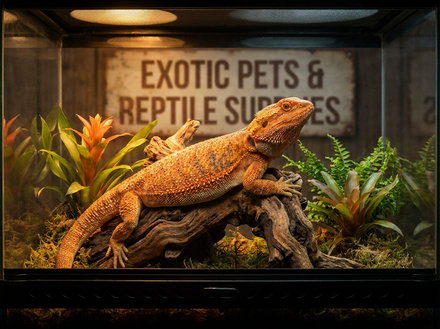

Care articles & how-tos
All WCP Bearded Dragons posts →


Free guide
Download as PDF ↓The complete bearded dragon care guide
The whole guide, free to read right here — habitat, diet, lighting, troubleshooting and a first-48-hours quick start. No email required.
An honest, do-this-now field manual for first-time dragon keepers — from our family in Christiana, Lancaster County, Pennsylvania, to yours.
Welcome to the family! You're about to live with one of the most expressive animals in the reptile hobby. Beardies arm-wave, head-bob, puff their beards, and will stare at you through the glass until you hand over a roach.
Here's the honest part: bearded dragons are easy to keep well and easy to keep badly, and the difference is equipment and numbers — not love. Nearly every sick dragon we hear about is a husbandry problem. So this guide leads with the numbers.
Read Section 1 tonight. Read the rest this week.
Quick Start: Your First 48 Hours
Your dragon just had the worst day of its life — shipped in a dark box, handed to a stranger, dropped somewhere unfamiliar. Your only job for two days is heat, light, water, and quiet. Taming comes later.
Do this now, in order
- Set up the enclosure 24–48 hours before the dragon arrives. A full day of running lights and heat finds problems without a live animal inside.
- Confirm your three numbers (Section 6) with a temp gun and digital probe. A thermometer is cheaper than a vet visit.
- Lay plain paper towel as your starting substrate — even if you bought something nicer. You see every dropping and carry zero impaction risk through the riskiest week.
- Put the dragon in and walk away. No handling, no photos, no visitors. Let it find the basking spot itself.
- Offer water by lightly misting the décor and setting out a shallow dish. Most dragons don't recognize still water — they respond to droplets.
- Don't feed for the first 24 hours. A stressed dragon that eats often regurgitates. On day two, offer a few calcium-dusted insects from a dish.
- Watch baseline behavior. Flattened out under the lamp, eyes closed, is a happy dragon. Hiding at the cool end all day or pacing the glass means your temperatures are probably off — recheck them.
- Start a log. Date, what it ate, whether it pooped, weight weekly. Three lines a day, and it's the most useful thing you'll own when something seems off next year.
- Find a reptile vet before you need one. Call a local exotics practice this week and save the number.
- Book a wellness exam and fecal test in the first few weeks. Parasites are common in dragons from high-volume sources.
Clean Fuel, No Junk. Read every label — food bowl and substrate bag alike. No mystery ingredients.
First-Time Starter Bundle
Buy every Essential before the dragon comes home. Add Enrichment over the first month.
Essentials (non-negotiable)
- Enclosure — 4' x 2' x 2' (~120 gallons) for an adult; a 40-gallon breeder (36" x 18") is the absolute floor. Look for front-opening doors, a vented or screen top, and solid build that holds heat at one end. Buy adult-sized once; upgrading twice costs more.
- UVB lighting — a linear T5 High Output tube, 10–12% UVB, in a reflective fixture spanning two-thirds to three-quarters of the enclosure length. No compact coil bulbs. UVB is the ultraviolet band that lets a dragon make vitamin D3, which lets it absorb calcium. No UVB means metabolic bone disease (MBD) — soft, deforming bones — and it happens silently.
- Basking heat source — a white halogen flood bulb in a ceramic-socket dome, for a tight, bright, sun-like beam. Fixture rated well above the bulb's wattage.
- Thermostat — mandatory, not optional (Section 6). A heat source without one is a burn waiting for a bad day.
- Digital thermometer, hygrometer, and infrared temp gun — the gun reads the surface your dragon's belly touches, the probe reads air, the hygrometer reads humidity. Digital only; stick-on dial gauges are notoriously inaccurate.
- Substrate — paper towel for week one, then your permanent choice (Section 4). Never calcium sand.
- Food and supplements — live staple insects, fresh leafy greens, plain calcium powder (no D3), calcium with D3 on the Section 5 schedule, and a reptile multivitamin. Single-ingredient, additive-free, dated.
- Water dish and feeding dish — shallow and tip-proof. The feeding dish is a safety item: insects served in a dish rather than loose on the floor is the top impaction preventer.
- Hide — at least one at the cool end, dark inside, big enough to turn around in. A dragon with nowhere to disappear never fully relaxes.
Enrichment (what makes it a life, not a box)
- Climbing branches — cork bark, grapevine, manzanita. Wide, stable, secured at both ends; beardies are semi-arboreal and climb toward light.
- Basking platform — a flat slate slab or stone shelf lifting your dragon's back toward the lamp while its belly rests on warm stone. Best function-plus-enrichment buy you'll make.
- Hammock — corner-mounted mesh or fabric. Adds usable surface without floor clutter.
- Foraging items — a contained dig box of coconut fiber or sterilized topsoil, scatter trays, puzzle feeders. Digging is real natural behavior; a dig box gives the outlet without carpeting the floor in loose substrate.
- Live plants — safe, pesticide-free species in sealed planters: prickly pear, haworthia, hens-and-chicks, dwarf jade. No treated nursery stock; they get nibbled.
- Safe décor and visual barriers — rock piles, half-logs, cork tubes, artificial desert plants. Choose pieces that break up sightlines (Section 3). A cluttered enclosure is a calmer enclosure.
Meet Your Bearded Dragon
Origin. Pogona vitticeps, the central bearded dragon, comes from the arid woodlands and rocky semi-deserts of inland Australia: brutal overhead sun, hard-packed ground with rock and timber to climb, dry air. You're rebuilding an Australian woodland floor — not a sand dune. The all-sand desert look is a pet-store invention.
Size. Adults reach 16–24 inches nose to tail tip, most of it tail, at roughly 350–600 grams, fully grown between 12 and 18 months. The four-inch hatchling becomes a two-foot lizard needing real floor space.
Lifespan. 10–15 years with good husbandry — a decade-plus commitment, like a dog, including who covers care when you travel.
Temperament. Among the friendliest reptiles in the hobby, and the reputation is earned. Most tolerate and many seem to enjoy handling. They're diurnal, so they're awake when you are. And they talk with their bodies:
- Arm-waving — slow circular lift of one front leg; submission or acknowledgment. Normal.
- Head-bobbing — fast and jerky is dominance or breeding display, slow is milder. Normal, especially adult males.
- Beard puffing and darkening — a warning or display. Normal in short bursts.
- Mouth gaping while basking — usually thermoregulation, like a panting dog. Only a worry alongside wheezing or mucus.
- Flattening out like a pancake — maximizing surface area under the lamp. Happy dragon.
Why they're a great first reptile. Forgiving of handling, readable body language, a varied diet you can buy locally, active in daylight hours, no demanding humidity requirements, and a huge documented knowledge base.
What surprises new owners. The equipment costs more than the dragon, often several times over, and lighting is where people cut corners and shouldn't. They eat live bugs in quantity for life, so you'll keep a roach or cricket colony on a shelf. UVB bulbs expire while still glowing, which is why tubes go on a 12-month calendar replacement. And they slow way down in winter (brumation, Section 7), which alarms nearly every first-year owner.
Habitat & Terrarium Layout
Think of the enclosure as three zones along its length, not a uniform box. Everything hot at one end, everything cool and shaded at the other. Your dragon walks between them all day to regulate its own body temperature — that movement is the system working, and it's why you never heat the whole enclosure evenly.
Footprint: a 40-gallon breeder (36" x 18" x 18") is the absolute minimum for an adult and genuinely cramped for a big male. Recommended: 4' x 2' x 2' (48" x 24" x 24"), about 120 gallons. Floor space beats height. One dragon per enclosure (Section 7).
The three zones
| Zone | Where | Daytime temperature | What goes here |
|---|---|---|---|
| Basking | One short end, raised | 100–115°F surface — adults 100–110°F, hatchlings and juveniles 105–115°F | Flat slate platform under the heat lamp, branch access from below, UVB tube overhead |
| Mid / transition | Center third | 85–95°F | Climbing branches, hammock, partial hide, plants |
| Cool | Opposite short end | 75–85°F | Primary dark hide, water dish, dig box, dense décor |
At night a drop to 65–75°F throughout is normal and healthy. No light at night, ever. If your room falls below about 65°F, add a non-light-emitting heat source on a thermostat — never a colored "night bulb."
Vertical furniture. Build a ramp of stable surfaces from floor to basking platform so your dragon can choose its own distance from the lamp — the finer that choice, the better it self-regulates. Secure everything at both ends, and leave 10–12 inches of clear air between the highest climbable surface and the bulb so a determined dragon can't press against it and burn.
Sightline breaks and visual barriers. The most-skipped part of reptile husbandry, and it changes behavior fast. A dragon in a bare glass box sees every direction at once with nothing between it and whatever moves in the room — in the wild, that means exposed. The result is chronic low-grade stress: glass surfing, refusing food, never settling. Fix it with clutter. Place tall décor and dense plants so the dragon can't see end to end in a straight line. Back at least two sides of a glass enclosure. Give two hides, warm side and cool side, so it never has to choose between hiding and thermoregulating. Site the enclosure in a normally active room, but not a doorway and never facing a window. Dragons in cluttered setups use more of the space, not less.
UVB vs. heat placement. Two pieces of equipment, two jobs, same end of the enclosure — because in nature warmth and ultraviolet come from the same sun. Mount the UVB tube along the roof so its output covers the basking platform and reaches into the mid zone; the dragon must be able to move out of UVB as well as into it. Mount the heat lamp at the basking end over the platform in a reflector dome. If fixtures sit on mesh, mesh blocks a meaningful share of UVB, which changes mounting height (Section 6). Never put heat at the cool end, never run two basking lamps at opposite ends, and never use heat mats or heat rocks as primary heat — beardies bask from above and don't reliably detect dangerous heat underneath them.
Ventilation. Dry, moving air, and it's also what keeps humidity in range. A screen or heavily vented top is standard. In a mostly sealed PVC enclosure, ensure cross-ventilation — low vents one side, high the other — so humid air doesn't pool at the bottom. Stagnant damp air causes respiratory infections in a species built for dry woodland.
Substrate Guide
Substrate is where new owners spend the most worry and where risk is simplest to eliminate. The honest summary: substrate is a secondary variable. A dragon on washed quartz sand that's always fed from a dish, well hydrated, and basking in range is in better shape than a dragon on paper towel that's dehydrated and ten degrees too cold. That's not a defense of sand — it's an argument for treating husbandry as the real lever.
If you're not fully confident yet, use tile. It removes the guesswork and the risk in one move.
| Option | Best for | Pros | Cons and risks |
|---|---|---|---|
| Unglazed ceramic tile or slate | All life stages; the default | Zero ingestion risk, excellent belly heat, wipes clean, permanent | No digging outlet without a dig box; needs cutting to fit |
| Paper towel or newsprint | Hatchlings, quarantine, illness, week one | Zero risk, disposable, droppings easy to inspect | No enrichment, daily replacement |
| Bioactive soil-and-sand mix | Experienced keepers only | Full digging and foraging, partly self-cleaning, naturalistic | Needs drainage layer, sterilized topsoil, and an isopod or springtail clean-up crew; shortcuts turn it into a damp, bacteria-friendly mess |
| Washed plain quartz sand | Healthy adults under tight husbandry only | Natural digging substrate, good thermal mass | Conditional ingestion and impaction risk; must be rinsed and dried; never for juveniles or sick dragons |
| Excavator clay | Intermediate keepers wanting burrows | Sets hard, holds tunnels and ledges, low loose-particle risk | Labor-intensive install, long cure, hard to deep-clean |
| Non-adhesive shelf liner | Budget setups, deep-clean rotation | Cheap, cuttable, easy to swap | Poor heat retention, shreds under claws |
Avoid outright
- Calcium sand / "calci-sand" — the "digestible" claim isn't backed by veterinary guidance. It clumps when wet, irritates eyes, and is strongly associated with impaction.
- Crushed walnut shell — sharp-edged, indigestible, high impaction risk.
- Wood chips, bark, cedar, pine shavings — wrong particle size, and aromatic woods release compounds that irritate reptile airways.
- Any loose substrate for hatchlings and juveniles — narrow digestive tracts, aggressive hunting, far more substrate swallowed per meal.
- Dyed, scented, or chemically treated sand — additives have no place where your animal licks the floor.
- Sand or soil from a beach, riverbed, or yard — parasites, mold spores, unknown contaminants.
Impaction, in plain terms
Impaction is a blockage of the digestive tract by material that won't pass. With substrate it almost never happens in one dramatic swallow — it accumulates. Every tongue-flick at a cricket sitting on sand takes a few grains along. One grain is nothing; hundreds over weeks, in a dragon with sluggish gut motility, can compact into a mass.
Four things stack the odds, and none of them are the sand itself: chronic dehydration, which thickens gut contents; basking temperatures below range, which weakens digestion directly; untreated parasites; and young age. Dust is the quieter harm — particles kicked up by digging settle into eyes and airways, causing squinting, weeping, and wheezing that mimics a respiratory infection.
The 4 safety checks for sand use
Use sand only if you can answer yes to all four, every day. One no means tile.
- Life stage and health. Only a healthy, fully grown adult qualifies — no hatchlings, juveniles, sick, underweight, or recovering dragons — plus a recent fecal check ruling out parasites.
- Husbandry dialed in. Basking temperatures consistently in range, a hydration routine that keeps stool normal, and a reptile vet you can actually reach. Sand isn't where you experiment while still learning your temperatures.
- Feed off the substrate, always. Insects in a shallow dish or on a separate tile square, never scattered on sand. Greens in a bowl. This one habit cuts ingestion risk more than any product choice.
- Product prep and active monitoring. Plain, washed, uncolored quartz sand only — reject any bag listing calcium carbonate, added color, or fragrance. Rinse until the runoff is clear, dry completely. Then watch: licking or biting at sand outside feeding time, straining without stool, several days with no bowel movement, dry grit-studded stool, or a firm belly bulge means a vet visit and a substrate change, not wait-and-see.
| Cleaning task | Frequency |
|---|---|
| Spot-scoop waste and uneaten food | Daily |
| Sift loose substrate, check moisture | Weekly |
| Full replacement of loose, non-bioactive substrate | Every few weeks |
| Deep clean and disinfect hard surfaces and décor | Monthly |
| Fecal and parasite check with your vet | Every 6–12 months |
Mold, a persistent smell, or a dragon that stops basking normally all mean pull the loose substrate and switch to something solid.
Diet & Nutrition
Bearded dragons are omnivores whose diet flips as they grow. Babies build bone and muscle fast, so they're mostly insectivorous. Adults that keep eating like babies get fat and develop fatty liver disease. After lighting, this shift is the biggest thing you control.
Insect-to-greens ratio by life stage
| Life stage | Age | Insects : greens | Feeding schedule | Notes |
|---|---|---|---|---|
| Hatchling | 0–3 months | 80 : 20 | Insects 2–3x daily, as many as eaten in 10–15 minutes; greens all day | Prey no wider than the space between the eyes |
| Juvenile | 3–8 months | 70 : 30 | Insects 1–2x daily; greens all day | Fastest growth; never skip calcium |
| Sub-adult | 8–18 months | 50 : 50 | Insects daily or every other day; greens daily | Taper insects as growth slows |
| Adult | 18 months and up | 20–30 : 70–80 | Insects 2–4x per week; greens every day | Weigh monthly; overfeeding insects is the classic adult problem |
Fresh greens go in daily at every stage, even when your dragon ignores them — chopped small, lightly misted, in a shallow dish. Persistence works; plenty of dragons start eating greens months after they first appear.
Feeder insects
| Staple (regular rotation) | Occasional (weekly or treat) | Never |
|---|---|---|
| Dubia roaches — gold standard: meaty, low fat, easy to keep, can't climb glass or chirp | Superworms — adults only, high fat, good for tempting appetite | Fireflies and lightning bugs — fatally toxic, even one |
| Crickets — solid second, widely available | Mealworms — hard chitin shell, occasional only, not for juveniles | Any wild-caught insect — pesticides and parasites |
| Black soldier fly larvae (phoenix worms) — naturally calcium-rich | Waxworms — pure treat, very high fat | Bees, wasps, spiders, scorpions, centipedes |
| Discoid roaches — like dubia, legal where dubia aren't | Hornworms — excellent hydration, low nutrient density | Boxelder bugs, monarch caterpillars, other toxic-defense insects |
| Silkworms — soft-bodied, high moisture, well accepted | Butterworms, grasshoppers, locusts where legal | Hard-shelled beetles and anything you can't identify |
Gut-loading means feeding your insects nutritious food for 24–48 hours before they go to your dragon, so the insect becomes the nutrient delivery system. Feed your feeders collard, dandelion, and mustard greens, squash, carrot, and a quality commercial gut-load. An insect raised on cardboard and potato is mostly water and chitin. The step is free, and it's the one most keepers skip.
Prey size rule: no insect wider than the gap between your dragon's eyes. Oversized prey is a choking and impaction risk, especially in juveniles.
Greens and vegetables
| Safe staples (rotate freely) | Caution — occasional, small amounts | Never |
|---|---|---|
| Collard greens — high calcium, easy to find | Kale, bok choy, cabbage, broccoli — goitrogens, compounds that can interfere with thyroid function in quantity | Avocado — toxic |
| Mustard greens — nutritious, well accepted | Spinach, beet greens, Swiss chard — high oxalates, which bind calcium and make it unavailable | Rhubarb leaves — toxic |
| Dandelion greens — excellent calcium-to-phosphorus ratio | Berries, melon, papaya — high sugar, treat only | Onion, garlic, chives |
| Turnip greens — reliable staple | Carrot — high vitamin A, small amounts | Iceberg lettuce — no nutrition, causes loose stool |
| Escarole, endive, arugula | Tomato, cucumber — low nutrition, mostly water | Wild-foraged plants you can't positively identify |
| Butternut and acorn squash, bell pepper, prickly pear pad, green beans | Peas, corn — starchy, occasional | Houseplants and treated nursery plants |
Aim for a calcium-to-phosphorus ratio above 1:1 across the whole diet — which is why collard, mustard, turnip, and dandelion greens are the backbone, and why spinach works against you despite looking healthy.
The calcium rule
Your dragon builds bone from dietary calcium, and it can only absorb that calcium with vitamin D3, which it manufactures in its skin under UVB. Break either link and you get metabolic bone disease (MBD) — bones that soften, bend, and fracture. MBD is the most common serious illness in captive bearded dragons and it's almost entirely preventable. The rule: dust insects at essentially every feeding, and keep your UVB current.
| Supplement | Who | How often |
|---|---|---|
| Plain calcium, no D3 | Hatchlings and juveniles | Dust insects at every feeding |
| Plain calcium, no D3 | Sub-adults and adults | Every feeding, or at minimum 3x per week |
| Calcium with D3 | All stages with proper T5 UVB in place | Replaces a plain-calcium dusting 1–2x per week |
| Calcium with D3 | Any dragon with weak, expired, or no UVB | Becomes the primary calcium source — but fix the UVB; supplements are a patch, not a solution |
| Reptile multivitamin | All stages | Once per week, or every other week for adults |
Dust by shaking insects in a cup with a pinch of powder — a faint coating, not a snowball. Don't combine multivitamin and D3 in one dusting; over-supplementing D3 and vitamin A is its own problem. Keep powders sealed and dry, and replace them annually since they lose potency.
Hydration
Most bearded dragons never learn to drink from a standing bowl, because still water isn't a thing in inland Australia. Keep a shallow dish anyway, then hydrate three other ways: mist the greens lightly before offering, the most effective daily route; give a warm 10–15 minute soak 2–3 times a week in water no deeper than the shoulder, around 90–95°F, never unsupervised; and mist the décor briefly in the morning, letting it dry by midday, since droplets trigger the drinking reflex while standing dampness causes problems.
Dehydration signs: wrinkled skin that doesn't snap back, sunken eyes, sticky mouth, thick white urates, dry crumbly stool, lethargy.
Lighting, Heat & Humidity — The 3 Numbers
Remember this if you remember nothing else: reptile husbandry comes down to three numbers you measure, not three products you buy. Equipment is how you hit the numbers; the numbers are the goal.
| The number | Target | How to measure | Why it matters |
|---|---|---|---|
| Basking surface temperature | 100–115°F — adults 100–110°F, hatchlings and juveniles 105–115°F | Infrared temp gun aimed at the basking platform surface | Digestion, immunity, and activity all run on heat. Too cool and food sits and ferments; too hot risks burns and chronic stress |
| Cool-end temperature | 75–85°F daytime air; 65–75°F at night | Digital probe thermometer at the cool end, at dragon height | Without a cool refuge your dragon can't shed heat, and thermoregulation collapses |
| Humidity | 30–40%, with brief spikes after misting or soaking | Digital hygrometer in the mid zone | Too dry causes shedding problems; sustained damp causes respiratory infection and skin disease |
Two supporting numbers matter nearly as much:
| Supporting number | Target | Notes |
|---|---|---|
| UVB index (UVI) at the basking spot | UVI 3.0–4.0 — Ferguson Zone 3, the full-sun basking band | A linear T5 HO 10–12% tube typically lands here at roughly 12–15 inches above the basking surface with no mesh between, or roughly 8–12 inches mounted above a screen top, since mesh blocks a significant share of UVB. Always follow your specific bulb's distance chart; output varies by model. Replace the tube every 12 months on the calendar, even while it still lights |
| Photoperiod | 12–14 hours of light in summer, 10–12 hours in winter | Put lights on a timer. Shifting seasonally is natural and supports healthy brumation cycling. Total darkness at night — no colored night bulbs |
On Ferguson zones: researchers sorted reptiles into four groups by how much UV they seek in the wild. Bearded dragons sit in Zone 3, the full-sun baskers — which is why they need a strong linear tube rather than the low-output options suited to shade-dwellers. A UVI meter is the gold standard for confirming you're in band, and the one specialty tool worth buying or borrowing if you'll keep reptiles long-term.
Why thermostats are mandatory
An unregulated bulb puts out the same heat whether your room is 62°F in February or 84°F in July — a basking spot too cold half the year and dangerously hot the other half. And if a fixture fails in the on position, nothing stands between your animal and a burn. A thermostat reads a probe at the basking surface and controls the heat source to hold your target; it costs less than one emergency exotics visit. Mount the probe at the basking surface, secured so your dragon can't move it or lie on it, and verify with your temp gun after every change.
| Heat source | Thermostat type | Why |
|---|---|---|
| Halogen or incandescent basking bulb (light-emitting) | Dimming | Raises and lowers brightness and heat together, avoiding the strobing of on/off switching on a visible light |
| Ceramic heat emitter or deep heat projector (no visible light) | Pulse-proportional | Holds temperature without the lifespan cost constant dimming puts on these elements; no light to flicker |
| Radiant heat panel | Pulse-proportional or on/off | Slow thermal mass tolerates cycling well |
| Heat mat (supplemental only, never primary) | On/off | Simple cycling is enough; mats should never be a beardie's main heat source |
Never run a heat source without a thermostat, never substitute a household dimmer switch, and never put an unregulated heat rock in the enclosure.
Humidity without mold or stress
Bearded dragons want dry air with occasional moisture, not a tropical setup. Keep the water dish at the cool end, never under the lamp where it evaporates into the warm zone all day. Mist briefly in the morning if at all, and let everything dry by midday — persistent damp substrate is the enemy. If humidity runs high, increase airflow before removing water sources. If it runs low and your dragon struggles to shed, add a humid hide at the cool end — a closed container of damp sphagnum moss with an entry hole — rather than raising humidity enclosure-wide. Any mustiness, visible mold, or wheezing means pull the moisture and increase ventilation today.
Common Challenges & Solutions
Impaction
See: No stool for several days to a week, straining without result, a firm bulge along the belly or tail base, reduced appetite, hind-leg weakness or dragging, lethargy. Why: Accumulated substrate, oversized or hard-shelled prey, dehydration, or basking temperatures too low for digestion — usually a combination. Do: Raise basking temperature to the top of range, warm 15-minute soaks daily, gently massage the belly front to back during soaks, switch to paper towel or tile now, feed only soft hydrating prey plus misted greens. Vet: Today, for hind-leg weakness, a hard palpable mass, a week or more without stool, or no improvement after 48 hours of supportive care. Impaction gets harder to treat the longer it sits.
Metabolic bone disease (MBD)
See: Tremors or twitching in toes and limbs, rubbery or swollen jaw, bowed legs, kinks in the spine, reluctance to walk or climb, fractures from ordinary movement. Why: Calcium deficiency — absent or expired UVB, missed dusting, a diet heavy in oxalate greens, or all three. The body strips calcium from the skeleton to keep the blood supplied. Do: Replace the UVB with a correct linear T5 HO today and verify mounting distance. Audit your dusting schedule. Cut high-oxalate greens. Handle minimally; bones may be fragile. Vet: Immediately on any tremor, jaw swelling, or limb deformity. Advanced MBD needs injectable calcium and prescription support, and existing deformities are permanent — early treatment is the whole game.
Brumation
See: Dramatically reduced appetite or total refusal to eat, sleeping for long stretches or days, burrowing, seeking cooler and darker spots, slow gradual weight loss. Usually late fall or winter, most often around ages 1–2. Why: A natural seasonal slowdown — analogous to hibernation but not the same, since your dragon isn't fully asleep. A hardwired response to shortening days and cooling temperatures. Do: Keep lights on their normal seasonal schedule and maintain temperatures; don't deliberately chill the enclosure. Offer a warm soak every week or two. Don't force-feed, don't wake them to check, weigh weekly. When they emerge on their own, bright-eyed and hunting, ramp feeding back up gradually over a week. Normal vs. alarming: A brumating dragon keeps normal color, normal muscle tone, clear eyes. Alarming is sunken eyes, dull patchy or discolored skin, labored or open-mouth breathing, rapid weight loss, diarrhea, or a dragon under about 12 months "brumating." Vet: On any alarming sign, if weight loss is rapid rather than gradual, or if a juvenile stops eating — young dragons don't have the reserves.
Appetite loss (outside brumation)
See: Refusing insects, greens, or both for more than a few days. Why: In rough order of likelihood — basking temperature too low, a recent move or change, shedding in progress, expired UVB, a boring diet, impaction, parasites, illness. Temperature is the cause far more often than anything medical. Do: Check your three numbers with instruments before changing anything else, then check the UVB install date. Cut handling and room traffic for a week. Offer a high-interest feeder — hornworms and silkworms tempt almost anyone. Confirm stool looks normal. Vet: If refusal lasts beyond a week or two with correct temperatures, or comes with weight loss, lethargy, or abnormal stool.
Stress marks and glass surfing
See: Dark grey or black oval markings on the belly and under the chin; frantic scratching or climbing at the glass, sometimes for hours. Why: Stress — a new enclosure, a bare setup with no visual barriers, too little floor space, a reflection read as a rival, another pet visible in the room, over-handling, or wrong temperatures. Do: Add clutter and sightline breaks (Section 3), back two sides of the enclosure, add a second hide, cut handling for a week, move the enclosure out of traffic paths and away from windows, confirm temperatures. Brief stress marks in a new dragon are normal; persistent ones are a message. Vet: Not usually needed for stress marks alone, but get a health check if they persist for weeks alongside appetite or weight loss.
Shedding problems (dysecdysis)
See: Patches of old skin that won't release, especially on toes, tail tip, and around the eyes; a constricting band of retained skin on a toe or tail. Why: Humidity too low, dehydration, poor nutrition, or too few rough surfaces to rub against. Retained skin on a digit can cut off circulation and cost a toe or the tail tip. Do: Warm soaks, a humid hide at the cool end, rough rubbing surfaces like cork and stone, good hydration. Do not peel skin — pulling retained shed tears the new skin underneath. Let soaking and rubbing do the work. Vet: If a retained band on a toe or tail tip won't release after several days of soaking, or if tissue beyond it looks dark, swollen, or shriveled. That's a circulation emergency.
Parasites and yellow fungus
See: Parasites — runny, foul-smelling, or bloody stool, weight loss despite eating, a bloated belly, lethargy. Yellow fungus, a deep fungal skin infection — yellow, brown, or grey crusty patches that don't resolve with shedding, often starting on limbs or tail and spreading. Why: Internal parasites are very common in dragons from high-volume sources and spread through contaminated feces. Yellow fungus is contagious and serious, and more likely in stressed, crowded, or chronically damp conditions. Do: For parasites, bag a fresh stool sample for a fecal test — don't guess at over-the-counter dewormers. For any suspicious crusty discoloration, isolate the dragon from all other reptiles immediately, upgrade hygiene, and get in to a vet. Vet: Yellow fungus needs diagnosis and prescription antifungals, is hard to cure once advanced, and spreads. Treat suspected cases as urgent.
Aggression and cohabitation
See: Repeated head-bobbing and beard displays, one dragon sitting on top of another, chasing, bite wounds, missing toes or tail tips, one dragon monopolizing the basking spot while the other hides, one losing weight while the other grows. Why: Bearded dragons are solitary and territorial. They don't need company, and the "they're fine, they cuddle" look is usually a dominant animal pinning a subordinate. Do: House one dragon per enclosure — not a preference, the standard. Separate immediately at any sign of conflict. Two males fight, males and females breed (hard on the female), two females can still bully. Resource monopolization means the subordinate is quietly starving and UV-deprived. Vet: For any bite wound, missing digit, or tail injury. Reptile bite wounds abscess readily.
Obesity and fatty liver disease
See: Fat pads bulging behind the eyes and at the tail base, pillowed armpits, a belly that spills wide when sitting, lethargy, reluctance to climb. Why: Too many insects for an adult, too many fatty feeders (superworms, waxworms, mealworms), too little space and climbing, not enough greens. Adults still eating a juvenile diet are the classic case. Do: Shift to the adult ratio — insects 2–4x weekly, greens daily. Cut fatty feeders to rare treats. Add climbing furniture and floor space to drive activity. Weigh monthly and change slowly; crash diets stress the liver further. Vet: If lethargy persists after diet correction, or you see pale stools, a yellowish tinge to gums or skin, or abdominal swelling.
Atadenovirus (ADV)
See: In juveniles, failure to thrive — a dragon that stays small, eats poorly, and grows slower than clutchmates, sometimes with tremors or head tilt. In adults, often nothing visible; a carrier can look healthy while shedding virus. Why: A contagious viral infection spread through feces and direct contact, widespread in some breeding lines. It damages the liver and digestive tract and opens the door to secondary infections. Do: Quarantine every new dragon 30–60 days minimum with separate equipment and strict hand hygiene before it shares a room with another reptile. Ask breeders whether their stock is ADV-tested. Testing is available through exotics vets. Vet: For any juvenile that isn't growing on correct husbandry. There's no cure, but supportive care and excellent husbandry let many ADV-positive dragons live reasonable lives — and knowing the status protects every other reptile in your home.
Troubleshooting Quick-Reference
| Symptom | Likely cause | First action |
|---|---|---|
| Not eating, cool season, normal color and tone | Brumation | Hold temperatures and lights, weekly warm soaks, don't force-feed, weigh weekly |
| Not eating, warm season | Basking temperature too low, or expired UVB | Measure basking surface with a temp gun, check UVB install date, cut handling for a week |
| No stool for 5+ days, straining | Impaction or dehydration | Daily warm soaks, raise basking temperature, switch to paper towel, soft prey only |
| Dark oval marks on belly and chin | Stress | Add clutter and visual barriers, back two sides of the glass, cut handling |
| Scratching or climbing at the glass for hours | Stress, too little space, a reflection, or wrong temperatures | Add visual barriers, confirm the three numbers, remove mirror-like reflections |
| Limb or toe tremors, soft or swollen jaw | Metabolic bone disease | Vet today; replace UVB and audit calcium dusting |
| Retained skin banding a toe or tail tip | Humidity too low, dehydration | Warm soaks and a humid hide; never peel. Vet if it won't release in several days |
| Mouth gaping while basking, no other signs | Normal thermoregulation | None; verify basking temperature isn't above range |
| Gaping with wheezing, mucus, or puffed throat | Respiratory infection | Vet promptly; raise temperature to top of range, drop humidity, increase ventilation |
| Runny, foul, or bloody stool | Internal parasites | Bag a fresh fecal sample for the vet; don't self-treat |
| Crusty yellow, brown, or grey skin patches | Yellow fungus | Isolate from other reptiles, vet urgently |
| Weight climbing, fat pads behind the eyes | Obesity | Shift to the adult insect-to-greens ratio, cut fatty feeders, add climbing surfaces |
| Wrinkled skin, sunken eyes, sticky mouth | Dehydration | Warm soak now, mist greens daily, check humidity isn't far below 30% |
| Sudden lethargy, dark color, hiding all day | Temperature failure — dead bulb or thermostat fault | Measure all zones now, check bulbs and thermostat, vet if no improvement in 24 hours |
| Grit in stool after a substrate change | Substrate ingestion | Remove loose substrate today, soak, feed only from a dish, vet if stool stops |
Routine Care Calendar
| Frequency | Tasks |
|---|---|
| Daily | Fresh chopped greens, misted. Spot-clean waste and uneaten food. Check all three numbers. Refresh water. Confirm bulbs lit and thermostat holding. Watch basking, posture, alertness. Log food, stool, behavior. |
| Several times weekly | Insect feeding on your dragon's life-stage schedule, dusted per the calcium table. Warm 10–15 minute soak 2–3x. Short supervised handling once settled. |
| Weekly | Weigh and record. Wash and disinfect dishes. Sift or replace loose substrate. Wipe glass, spot-clean décor. Gut-load the feeder colony. Multivitamin dusting. Move one piece of décor for novelty. |
| Monthly | Full enclosure clean — remove and disinfect décor, replace substrate as needed. Nose-to-tail check: eyes, mouth, jaw, vent, toes, tail tip, body condition. Verify thermostat against your temp gun. Restock supplements, check expiry dates. Review the log for trends. |
| Every 3–6 months | Reassess enclosure size against growth. Inspect branches and platforms for stability. Review diet ratio against life stage. Consider a fecal check. |
| Annually | Replace the UVB tube — calendar-based, not when it dies. Vet wellness exam with fecal test. Replace calcium and multivitamin powders. Expect and prepare for the winter brumation window. Inspect fixtures, cords, and thermostat for wear. |
When to See a Vet
Reptiles mask illness until it's advanced — by the time a dragon looks sick, it has usually been sick a while. Today, not next week, for any of these:
- Tremors, twitching, a rubbery or swollen jaw, or a bent limb or spine — metabolic bone disease
- Hind-leg weakness or dragging, or a hard mass in the belly — advanced impaction
- Labored or open-mouth breathing, wheezing, popping sounds, or mucus at the nose or mouth — respiratory infection
- No stool for a week or more, especially with straining or a visible bulge
- Crusty yellow, brown, or grey skin patches that don't shed off — yellow fungus
- Bloody or black stool, or severe watery diarrhea
- Any bite wound, burn, deep scrape, or lost toe or tail tip
- Tissue protruding from the vent — a true emergency
- Rapid weight loss, sunken eyes, or skin that stays wrinkled when pinched
- Collapse, inability to right itself, head tilt, or circling — neurological signs
- A gravid female straining to lay for more than a day or two — egg binding
- A juvenile that isn't growing on correct husbandry
Bring your log, a photo of the enclosure with the lights on, your bulb brands and install dates, and a fresh stool sample in a sealed bag. A vet who can see your actual numbers diagnoses faster. Transport in a small, dark, secure container with a towel, kept warm — a warm car and a cloth-wrapped hand warmer, never direct heat on the animal.
FAQ
How hot should a bearded dragon's basking spot be?
Measure the surface your dragon's belly actually touches, not the air: 100–115°F, with adults at 100–110°F and hatchlings and juveniles at 105–115°F. Use an infrared temp gun aimed at the basking platform, and keep the heat source on a thermostat so it holds that number in February and in July. Too cool and food sits and ferments; too hot risks burns and chronic stress.
What do bearded dragons eat?
They're omnivores whose diet flips as they grow — babies are roughly 80% insects to 20% greens, adults flip to 20–30% insects and 70–80% greens. Staple feeders are dubia roaches, crickets, black soldier fly larvae, and silkworms, gut-loaded for 24–48 hours and dusted with calcium. Backbone greens are collard, mustard, dandelion, and turnip, offered fresh and misted every single day. Never feed fireflies (fatally toxic), wild-caught insects, avocado, rhubarb leaves, onion, or iceberg lettuce.
What size tank does a bearded dragon need?
For an adult we recommend 4' x 2' x 2' (48" x 24" x 24", about 120 gallons). A 40-gallon breeder (36" x 18") is the absolute floor and genuinely cramped for a big male. Floor space beats height, because the whole system depends on your dragon walking between a hot end and a cool end all day — buy adult-sized once instead of upgrading twice. One dragon per enclosure, always.
How long do bearded dragons live?
10–15 years with good husbandry. That's a decade-plus commitment much like a dog, including sorting out who covers care when you travel. Most dragons that fall short of it don't lose years to bad luck — they lose them to lighting, heat, and calcium.
Do bearded dragons need UVB light at night?
No — no light at night, ever. Dragons are diurnal and need total darkness to rest properly, so UVB and basking bulbs go on a timer and both switch off together. A nighttime drop to 65–75°F throughout the enclosure is normal and healthy. If your room falls below about 65°F, add a non-light-emitting heat source on a thermostat; never use a coloured "night bulb," red or blue — they still emit light.
Why won't my bearded dragon eat?
Temperature is the cause far more often than anything medical, so measure your basking surface and cool end with instruments before you worry. Then check the install date on your UVB tube (replace it every 12 months, even while it's still glowing), and consider whether it's shedding, newly moved, or heading into winter brumation. Cut handling and room traffic for a week and offer a high-interest feeder — hornworms and silkworms tempt almost anyone. If refusal runs past a week or two with correct temperatures, or comes with weight loss, lethargy, or abnormal stool, see a reptile vet.
Is sand safe for bearded dragons?
Conditionally, and only for a healthy, fully grown adult on plain washed quartz sand — never calcium sand, never a juvenile, never a sick or recovering dragon. It's only reasonable if you can say yes every day to all four checks: right life stage and a clean fecal, husbandry dialled in, every insect fed from a dish rather than loose on the substrate, and active monitoring for straining, grit in the stool, or a firm belly. Honestly, if you're not fully confident yet, use unglazed tile or slate — it removes the guesswork and the risk in one move.
How often should I feed my bearded dragon?
It depends entirely on age. Hatchlings get insects 2–3 times a day (as many as they eat in 10–15 minutes), juveniles 1–2 times daily, sub-adults daily or every other day, and adults just 2–4 times per week. Fresh greens go in every day at every stage, even when your dragon ignores them. Adults still eating a juvenile insect load is the classic cause of obesity and fatty liver disease, so taper deliberately as growth slows.
Can two bearded dragons live together?
No. Bearded dragons are solitary and territorial, they don't need company, and the "look how they cuddle" photo is usually a dominant animal pinning a subordinate. Two males fight, a male and female breed (hard on the female), and two females can still bully. The subordinate quietly loses the basking spot, the UVB, and the food — so house one dragon per enclosure, and separate immediately at any head-bobbing, chasing, bite wounds, or missing toes.
Why is my bearded dragon turning black under the chin?
A dark or black beard is a signal, not automatically an illness — it means stress, a threat display, or thermoregulation (dark skin absorbs heat faster). In short bursts it's completely normal, especially in a new dragon or an adult male showing off. When it's persistent, read it as a message about the setup: add clutter and sightline breaks, back two sides of a glass enclosure, give a second hide, cut handling for a week, and confirm your three numbers. If black beard or dark oval belly marks hang on for weeks alongside appetite or weight loss, book a health check.
Every Purchase Gives Back
Before we earn a dime, 10% of every purchase at Walnut Creek Supply goes to no-kill animal shelters across the country. Not a rounding-up prompt at checkout, not an afterthought — it comes off the top of every order, every day. Responsible pet ownership and community care are the same thing, and we'd rather build that in than talk about it.
That's the whole philosophy. No mystery ingredients. Clean Fuel, No Junk. Real food, real information, American-made where we can find it, from a family in Lancaster County that grows its own vegetables, keeps its own animals, and tests things before recommending them.
Your dragon will be with you for a decade or more. There'll be a winter it stops eating and scares you half to death, a shed that goes badly, a week you can't find dubias anywhere. That's normal, and you'll handle it — you've already read the part of this guide most owners never do.
When you need the next thing, we're here. Questions, a second opinion on a basking temperature, or help picking a tube: (717) 983-8069, or browse the reptile care guides and collections at walnutcreeksupply.com.
Welcome to the best life. From our family to yours — and to that two-foot lizard currently staring at you through the glass.
— Timothy and the Walnut Creek Supply family Christiana, Lancaster County, Pennsylvania
Frequently asked questions
How hot should a bearded dragon's basking spot be?
Measure the surface your dragon's belly actually touches, not the air: 100–115°F, with adults at 100–110°F and hatchlings and juveniles at 105–115°F. Use an infrared temp gun aimed at the basking platform, and keep the heat source on a thermostat so it holds that number in February and in July. Too cool and food sits and ferments; too hot risks burns and chronic stress.
What do bearded dragons eat?
They're omnivores whose diet flips as they grow — babies are roughly 80% insects to 20% greens, adults flip to 20–30% insects and 70–80% greens. Staple feeders are dubia roaches, crickets, black soldier fly larvae, and silkworms, gut-loaded for 24–48 hours and dusted with calcium. Backbone greens are collard, mustard, dandelion, and turnip, offered fresh and misted every single day. Never feed fireflies (fatally toxic), wild-caught insects, avocado, rhubarb leaves, onion, or iceberg lettuce.
What size tank does a bearded dragon need?
For an adult we recommend 4' x 2' x 2' (48" x 24" x 24", about 120 gallons). A 40-gallon breeder (36" x 18") is the absolute floor and genuinely cramped for a big male. Floor space beats height, because the whole system depends on your dragon walking between a hot end and a cool end all day — buy adult-sized once instead of upgrading twice. One dragon per enclosure, always.
How long do bearded dragons live?
10–15 years with good husbandry. That's a decade-plus commitment much like a dog, including sorting out who covers care when you travel. Most dragons that fall short of it don't lose years to bad luck — they lose them to lighting, heat, and calcium.
Do bearded dragons need UVB light at night?
No — no light at night, ever. Dragons are diurnal and need total darkness to rest properly, so UVB and basking bulbs go on a timer and both switch off together. A nighttime drop to 65–75°F throughout the enclosure is normal and healthy. If your room falls below about 65°F, add a non-light-emitting heat source on a thermostat; never use a coloured "night bulb," red or blue — they still emit light.
Why won't my bearded dragon eat?
Temperature is the cause far more often than anything medical, so measure your basking surface and cool end with instruments before you worry. Then check the install date on your UVB tube (replace it every 12 months, even while it's still glowing), and consider whether it's shedding, newly moved, or heading into winter brumation. Cut handling and room traffic for a week and offer a high-interest feeder — hornworms and silkworms tempt almost anyone. If refusal runs past a week or two with correct temperatures, or comes with weight loss, lethargy, or abnormal stool, see a reptile vet.
Is sand safe for bearded dragons?
Conditionally, and only for a healthy, fully grown adult on plain washed quartz sand — never calcium sand, never a juvenile, never a sick or recovering dragon. It's only reasonable if you can say yes every day to all four checks: right life stage and a clean fecal, husbandry dialled in, every insect fed from a dish rather than loose on the substrate, and active monitoring for straining, grit in the stool, or a firm belly. Honestly, if you're not fully confident yet, use unglazed tile or slate — it removes the guesswork and the risk in one move.
How often should I feed my bearded dragon?
It depends entirely on age. Hatchlings get insects 2–3 times a day (as many as they eat in 10–15 minutes), juveniles 1–2 times daily, sub-adults daily or every other day, and adults just 2–4 times per week. Fresh greens go in every day at every stage, even when your dragon ignores them. Adults still eating a juvenile insect load is the classic cause of obesity and fatty liver disease, so taper deliberately as growth slows.
Can two bearded dragons live together?
No. Bearded dragons are solitary and territorial, they don't need company, and the "look how they cuddle" photo is usually a dominant animal pinning a subordinate. Two males fight, a male and female breed (hard on the female), and two females can still bully. The subordinate quietly loses the basking spot, the UVB, and the food — so house one dragon per enclosure, and separate immediately at any head-bobbing, chasing, bite wounds, or missing toes.
Why is my bearded dragon turning black under the chin?
A dark or black beard is a signal, not automatically an illness — it means stress, a threat display, or thermoregulation (dark skin absorbs heat faster). In short bursts it's completely normal, especially in a new dragon or an adult male showing off. When it's persistent, read it as a message about the setup: add clutter and sightline breaks, back two sides of a glass enclosure, give a second hide, cut handling for a week, and confirm your three numbers. If black beard or dark oval belly marks hang on for weeks alongside appetite or weight loss, book a health check.
WCP Bearded Dragons
Every bearded dragon article we've published, in one place.
